Red Flower Watercolor by Marion A. Gunderson

February 3, 2010 by

(Click here to go to this blog’s home page.)
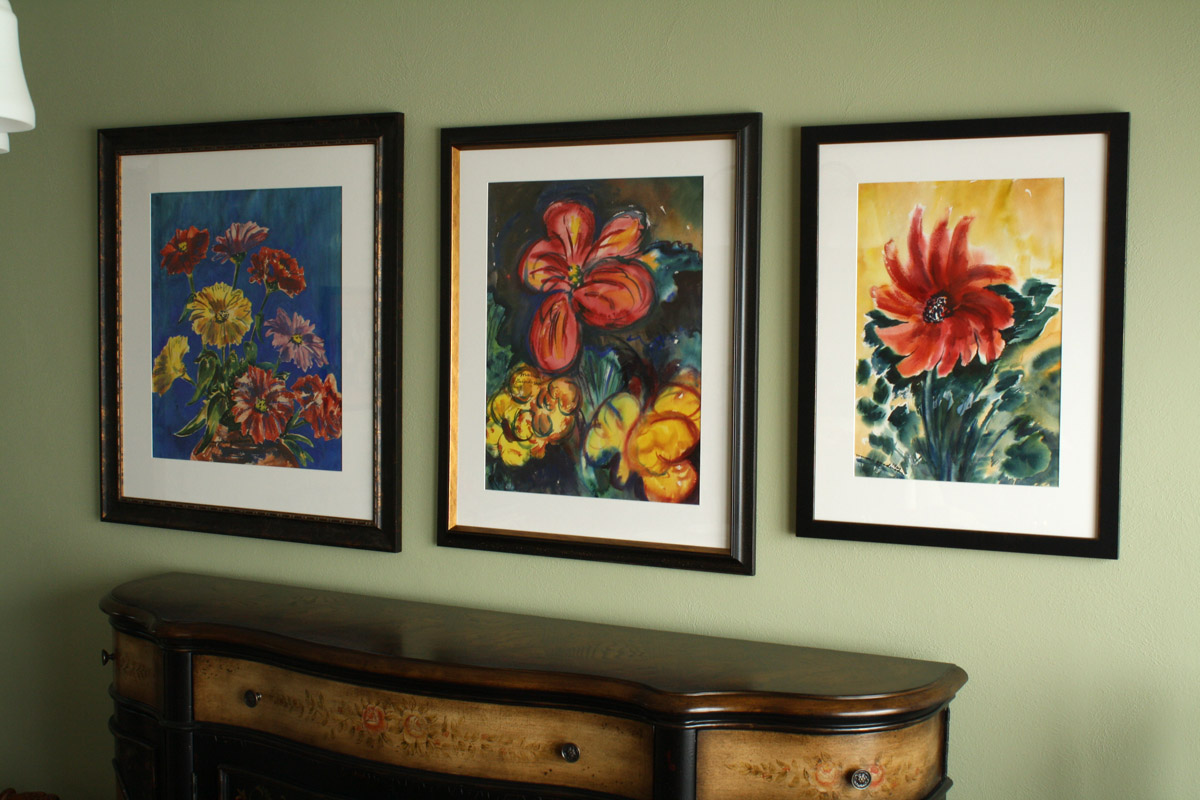
In this trio of originals of Mother's watercolors, Red Flower, painted in 1969, is at the right. (Click photo to enlarge.)

Several of Mother’s (Marion Gunderson) original watercolors were on display at the November open house. These originals were either loose and displayed on tables, or framed. Open house guests were informed that if they had an interest in having a print made of any of the displayed watercolors, to make me aware of their desires. If there was enough interest in prints of any particular watercolor, I’d consider making prints available.

(Click image twice to enlarge.)

Two women attending the open house expressed interest in this Red Flower original. Voila! Because of their interest, prints of Red Flower are now available in three sizes.

Small unmatted*: 7″ W x 10″ H; $15

Medium: 10″ W x 14 3/8″ H; $25

Large: ~13.5″ W x ~19.5″ H limited edition; $40 (The original has the same dimensions.)

Wild Faces Gallery in Rolfe, Iowa, intends to have available at least one print of each size. I plan to have the same inventory at my home. The Rolfe Public Library plans to have at least one print of Red Flower available; however due to space/storage constraints there, the library might not always have one of every size.

If you are interested in viewing and/or purchasing a print(s), feel free to do so at Wild Faces Gallery in Rolfe (712-848-3399) or at the Rolfe Public Library (712-848-3143). You may also view and/or purchase prints by contacting me at mariongundersonart@gmail.com. In addition, I am happy to ship prints.

These Red Flower prints are gorgeous. Just take my word for it. These prints are g-o-r-g-e-o-u-s.

* * * * *

* From time to time we’ll have this small size available with a pre-selected double mat option. The matted print will fit in a standard size 11″ x 14″ frame. When this pre-selected mat option is available, the matted print will be $29. We’ve started offering this matting on more small-sized prints because at the open house this option to fit in a standard size frame was so popular.

To see images of additional prints of Mother’s watercolors, click on “View and Order Prints” at the right side of this blog’s home page.
Strawberry Pretzel Salad Recipe (perfectly sweet and tart for Valentine’s Day)

February 1, 2010 by

(Click here to go to this blog’s home page.)

Before Wednesday night (hopefully by tomorrow night) I’ll post the image for the most recently available prints of one of Mother’s (Marion Gunderson) watercolors.

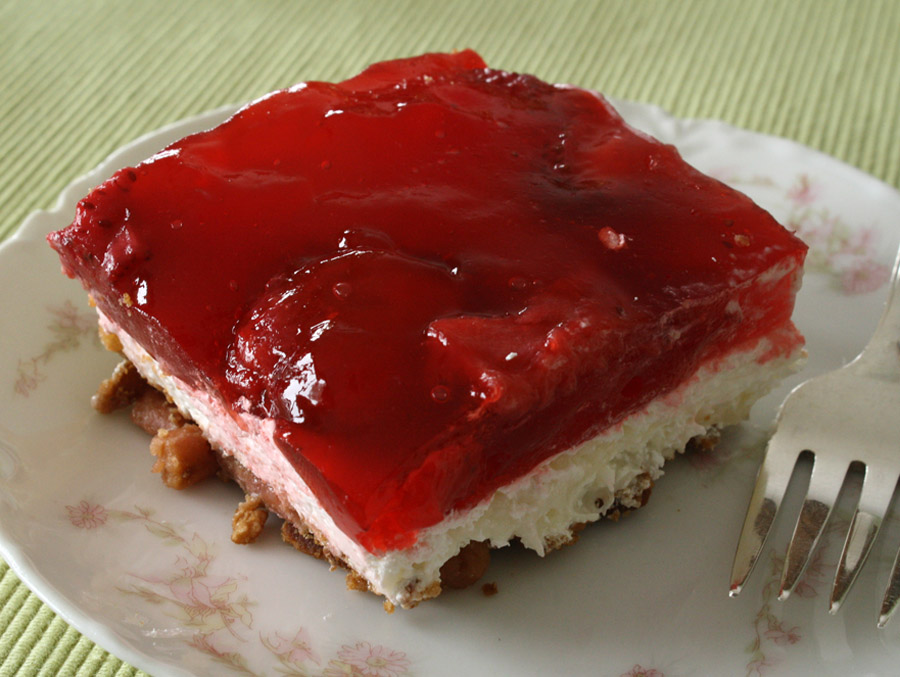
Strawberry Pretzel Salad. These Target-brand sliced strawberries are thicker/humpier than the more thinly sliced berries that I usually use.* (Click photo to enlarge.)

Saturday night Bill and I had good friends over for an informal dinner party. Our menu consisted of lettuce salad with bacon crumbles and balsamic vinaigrette dressing, lasagna (Rolfe’s Paula Pedersen’s recipe), sourdough bread (from Target), strawberry pretzel salad (Phyllis Poppen’s recipe), and Flarah’s mini-cheesecakes (purchased at Gateway Market, West Glen, West Des Moines). I was a little concerned about having two rectangular-and-also-red main menu items (lasagna and strawberry pretzel salad). However, my family-sounding-board said to go for it, so I did.

Since Saturday night, one of the guests requested the salad recipe. So, here is the pretzel salad recipe. This salad is almost like a dessert. But…shhhhhhhhh! If we don’t call it a dessert, in addition to this salad during the main course, we get to have dessert after the main course, as well!

* * * * *

* Even though the recipe says that my Jell-O mixture never gets partially set before I put it in the fridge, that is not true in this case. When I made the salad in the photograph, I accidentally left the Jell-O in the saucepan for about an hour before pouring it into the 9″x13″ pan. By that time, the Jell-O had definitely set making it look sort of humpy in this photo.

(Click here to go to Louise Shimon’s blog’s home page.)

Book Review: The Oral History Workshop by Cynthia Hart with Lisa Samson — Part II

January 29, 2010 by

(Click here to go to this blog’s home page.)

(This post follows Part I of the review of The Oral History Workshop by Cynthia Hart with Lisa Samson.)

* * * * *

The back cover of The Oral History Workshop: Collect and Celebrate the Life Stories of Your Family and Friends * (Click photo to enlarge.)

Specific parts of the The Oral History Workshop that I think are especially interesting deal with: 1. how to handle secrets, 2. obtaining legal clearance from the interviewee before beginning the interview (done simply with a document template included in the book), 3. common interviewee anxieties and 4. third-party problems (where three people are involved and one of them becomes domineering).

Technological explanations and concerns are also addressed.

Although the book includes 180 pages, its format allows for quick access of whatever oral history-related information I desire. This includes a sprinkling of double-page spreads throughout the book listing key points related to the several pages preceding or following the spread.

Pages 56 and 57 include “The Terrific Twenty” for those wanting a shortcut for twenty great questions to ask. These are just two of the book’s seventy pages suggesting questions to ask during an interview.  These seventy pages of questions are grouped in sixty-three categories such as “First Job and Money in the Bank,” “Coincidences and Luck,” and “Turning Points.”

Of course, no matter how informative and moving an oral history how-to book is, it is of no value until you (yes, you!) muster the get-up-and-go to actually conduct and record an interview of someone you care about of any age. (It could even be a self-interview.) This book provides the tools (except for the hardware and interviewee) that you’ll need. Time is the other necessary ingredient. There will never be the “perfect” time to conduct interviews, so, if you haven’t already recorded the history of those you care about, don’t wait…only to find out you are too late.

* Published by Workman Publishing, New York, 2009.

(Click here to go to Louise Shimon’s blog’s home page.)

Book Review: The Oral History Workshop by Cynthia Hart with Lisa Samson — Part I

January 27, 2010 by

(Click here to go to this blog’s home page.)

The Oral History Workshop* by Cynthia Hart with Lisa Samson. (Click photo to enlarge.)

I haven’t posted for a few days but want you to know that I haven’t been slacking! I’ve been enjoying every minute of calling and writing to people about sponsoring the digitizing of the oral history recordings of their loved ones. The response to making those contacts has been so heart warming.

If you have no idea what I’m referring to, the first paragraph of this blog’s oral history article provides a link to an explanation. The second paragraph of that same article includes a link for a spreadsheet.  The spreadsheet indicates the names of all of the people who were interviewed through the Rolfe Public Library’s 1980-1981 oral history project.

* * * * *

I’m excited about the book The Oral History Workshop: Collect and Celebrate the Life Stories of Your family and Friends* by Cynthia Hart and Lisa Samson. With a cover price of $12.95, this book is well worth the expense. I picked it up at Barnes and Noble.  It is also available at http://www.amazon.com and http://www.workman.com.

Although this book mainly addresses interviews involving more than one person, this book includes helpful tips and questions applicable to self-interviews, as well.

The workman.com site says, “The Oral History Workshop breaks down what often feels like an overwhelming project into a series of easily manageable steps.” Those are my exact sentiments. The table of contents indicates five main areas covered over the course of the book. The first four of these areas include: preparing for the interview, recording and troubleshooting the interview, mapping out the interview, and preparing and preserving the interview. The fifth main area is writing, scrapbooking and archiving the interview. The first four parts, and the archiving section in the fifth part, are most relevant to me.

Of two books I’ve read about conducting interviews to capture oral histories, this one “wins” hands down. It offers a wealth of advice that I wouldn’t have otherwise thought of, and that isn’t necessarily common sense. Also, the advice is not with linear thinking. The authors realize there are many types of situations with a variety of dynamics.

I’ll post Part II on Friday, January 29th.

* Published by Workman Publishing, New York, 2009.

(Click here to go to Louise Shimon’s blog’s home page.)

Iowa Winter with Wildflower “Sunshine”

January 22, 2010 by

(Click here to go to this blog’s home page.)

Next week I’ll post about an oral history book that I’ve found to be helpful. Within the next ten days I’ll post an image of Mother’s (Marion Gunderson) watercolor of which we’ve most recently had prints made.  The original and prints are g-o-r-g-e-o-u-s.

On another note, fortunately, Bill and I lost power for only a few hours yesterday. Friends of ours from west central Iowa said this morning that for 1 1/2 miles in either direction of their rural home, there is not a single electrical pole standing. With weighty ice on the power lines, the poles going down is like a domino effect that continues until a line snaps or comes loose from a pole.

* * * * *

From our wildflower garden. September, 2009. (Click photo to enlarge.)

I’ve been wanting to post a few pre-rain-and-ice winter photos from my time at Gunderland (my dad’s farm) early this week. The wintery weather is getting quite old, especially for those without electricity. Because of that, along with the “gray” weather photos below, to pep things up I decided to throw in the above photo of last September’s “sunshine” and color.

None of these photos are edited, except for resizing (but not cropping) the image files. I thought about Photoshopping these winter photos before posting so they would more closely resemble the actual scenery. I decided against editing them because, for one, I can’t really remember what the actual scenery looked like as far as color and whiteness because it was so foggy that day (Tuesday, January 20th). Also, because the photo shoot that day was an exercise for me in adjusting camera settings, including exposure, I figure I’ll post the original images and learn from them.

Next time I take photos of this wintery nature, I’ll try to have a gray card handy. (I’ll post about the benefit of a gray card sometime, as well. I learned about gray cards in my OLLI Photography Field Trips class.)

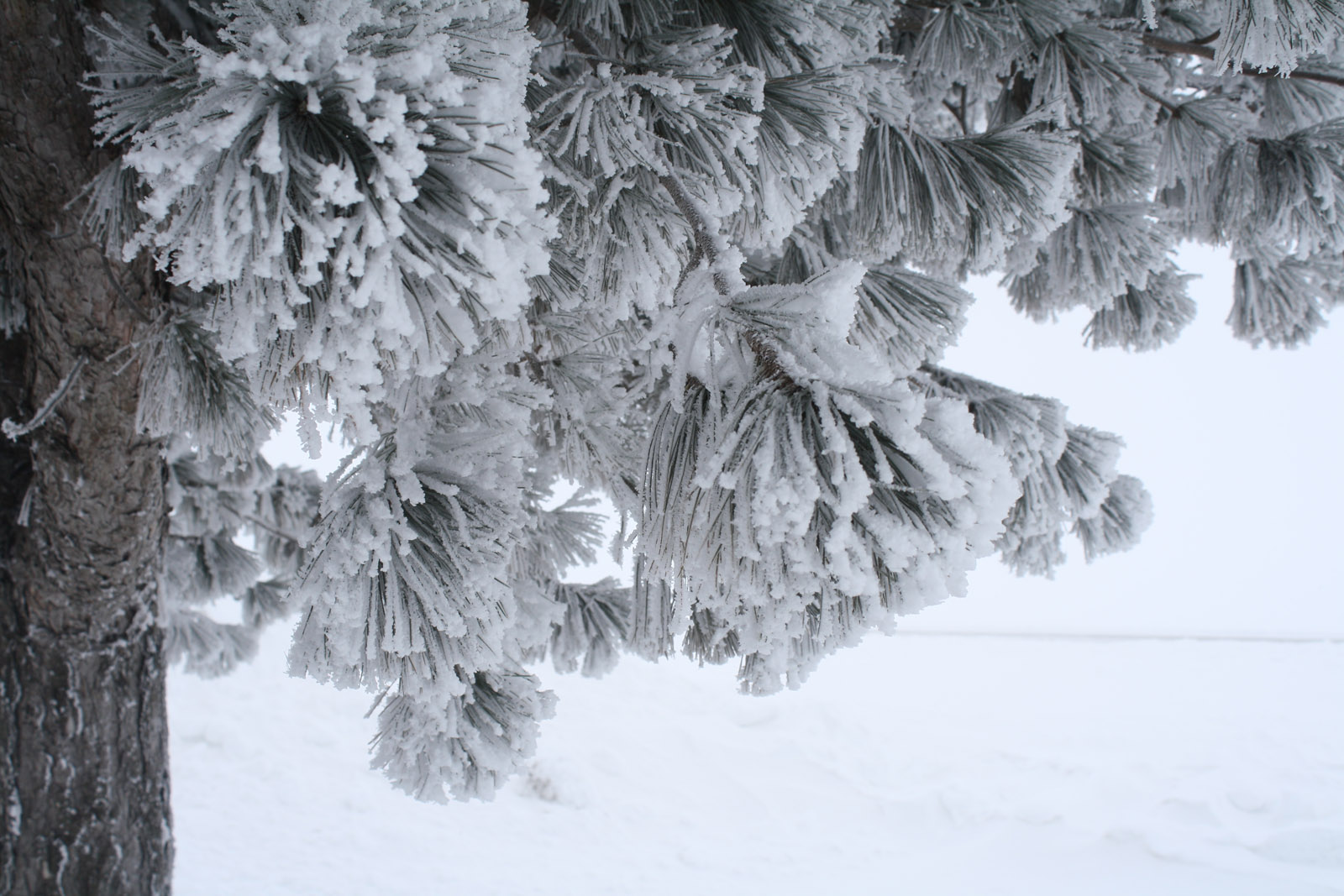
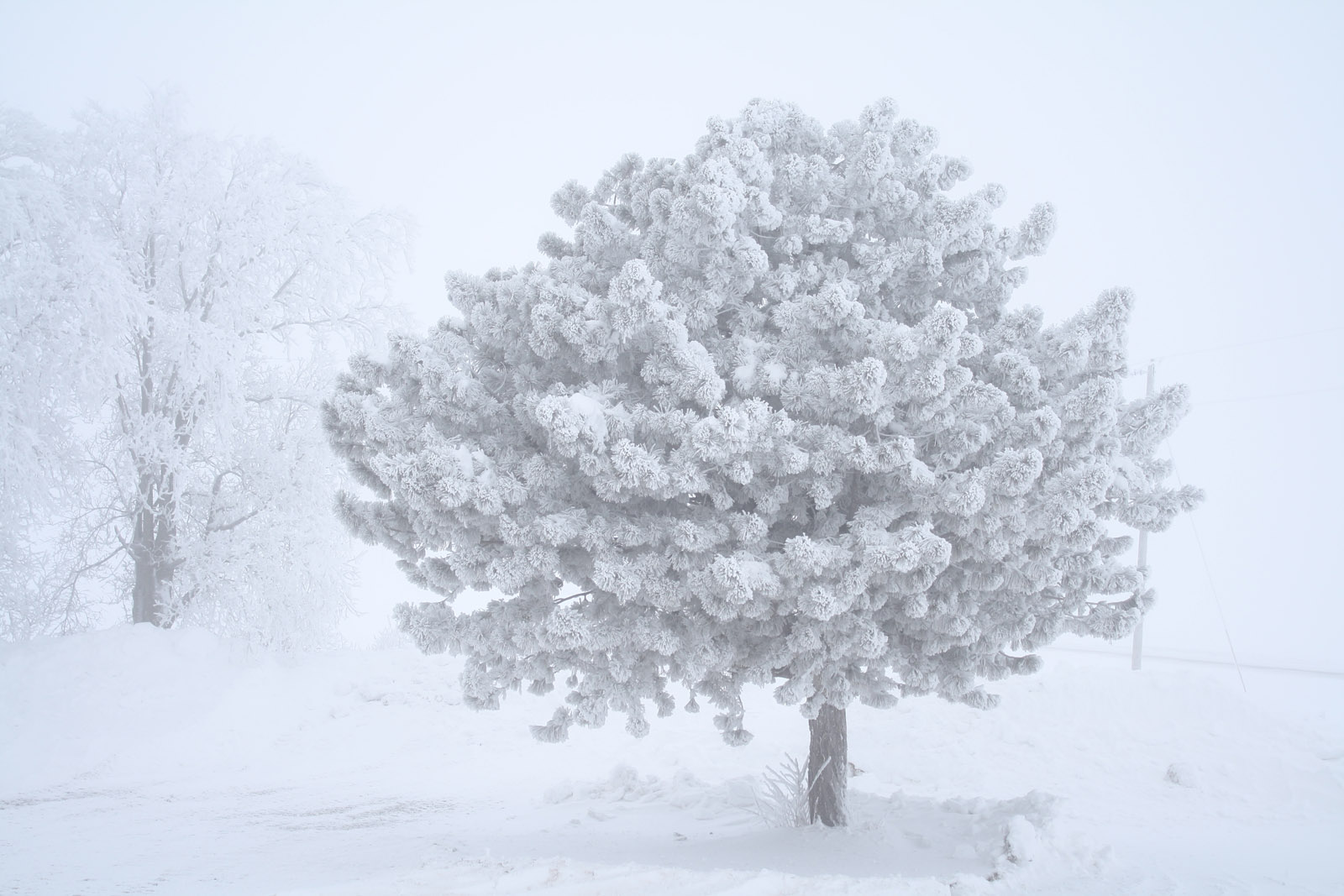
The following images are of the same tree at my dad’s farm and from approximately the same direction. For those of you aware of where my dad lives, this tree is to the west of the driveway, close to the gravel road.

Shutter: 1/250; Aperture: f/6.3; Exposure Bias: 1.33; Exposure Program: Aperture Priority; FL: 30 mm; Metering: Pattern; ISO: 200. (Click photo for detail.)

.

Shutter: 1/160; Aperture: f/8.0; Exposure Bias: 1.00; Exposure Program: Normal; FL: 23 mm; Metering: Pattern; ISO: 200. (Click photo to enlarge.)

.

Shutter: 1/400; Aperture: f/5.0; Exposure Bias: 2.00; Exposure Program: Aperture Priority; FL: 36 mm; Metering: Pattern; ISO: 200. (Click photo to enlarge.)

When I took this photo (immediately above), I tried a variety of exposure settings.  If I reduced the exposure at all, the photo looked too dark for how bright the scene actually was. It was pretty bright, but not this chalky white.

UPDATE:  In response to Clara’s comment asking from which direction I took these photos, click here for a photo that includes more of the surroundings.  If you are familiar with the area, the photo should help give bearings.

(Click here to go to Louise Shimon’s blog’s home page.)

Iowa Tree-Branch-Bending Ice

January 20, 2010 by

The near freezing temperatures and the rain made for an icy mess.

(Click here to go to this blog’s home page.)

These photos were taken today from either inside the house, or just one step out the front door. Due to the thick sheet of ice, it was too slick for me to feel brave enough to venture further.

We are fortunate to still have electricity. Hopefully the power lines and trees will weather the rain-turned-ice. more…

90 Days After a Fog…

January 20, 2010 by

(Click here to go to this blog’s home page.)

January 19, 2010, three miles southwest of Rolfe, Iowa.

Have you ever heard that 90 days after a fog it is supposed to storm (or rain or precipitate)?

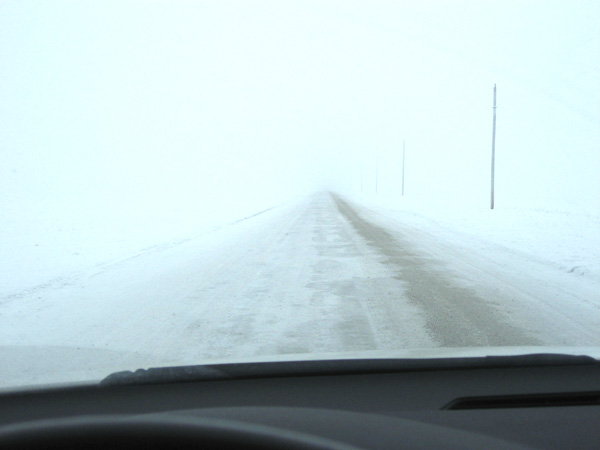
Over the past two days we’ve had a doozy of a fog. I was in northwest Iowa both days. The fog yesterday was very dense until mid-afternoon letting up just briefly for a sunny period before setting in again. Today (January 19th) the fog wasn’t quite as dense, but it still had a definite presence. On both days, when stopping at an intersection, I had to “roll” the car windows down to listen for traffic before proceeding through the intersection.

Back to the 90 day thing…it seems like just about every time we get major precipitation, Bill reminds me that 90 days prior, we had a dense fog. Maybe it is an old wives’ tale. One TV news video * seems to report that there really isn’t any truth to the 90-day saying. However, it will be interesting to make note of the weather around Arpil 18 and 19 (90 days from yesterday and today) to see if the saying holds true.

* WFRV-TV, Green Bay, Wisconsin

(Click here to go to Louise Shimon’s blog’s home page.)

Reflective Thought about the Reflector

January 14, 2010 by

(Click here to go to this blog’s home page.)

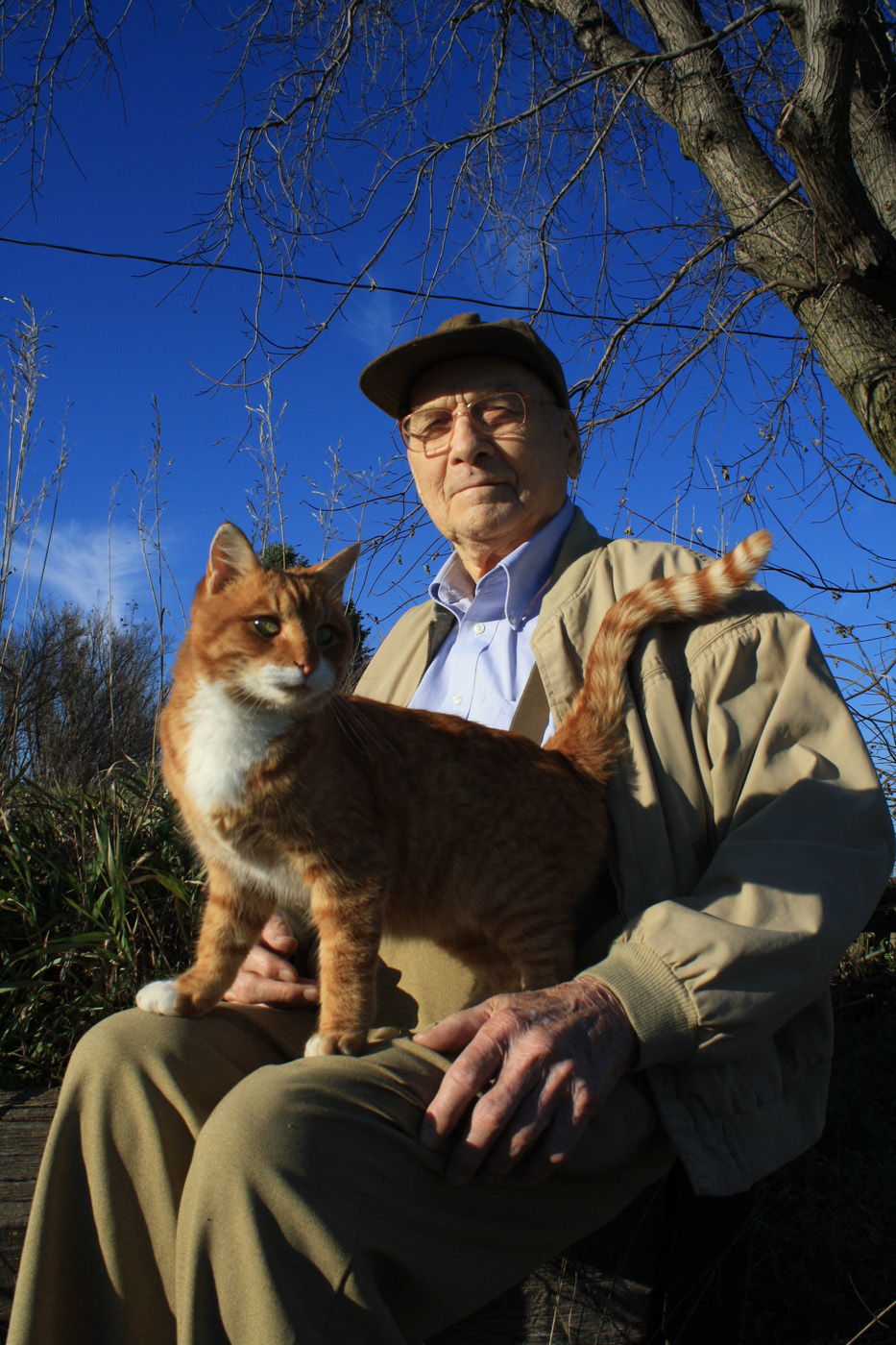
My 91-year-old dad and his cat, Mouser. Fall, 2009. (Click photo to enlarge.)

This photo is an example of where I’m thinking using a reflector (mentioned in the previous post and also two posts ago) could have been helpful. Since I haven’t yet used the 5-in-1 reflector that my next-older-sister Peggy gave to me for Christmas, it could be that I’m way off base here.  But, I’m thinking that if the reflector would have been at my dad’s (Deane Gunderson) left side in this photo there wouldn’t be so much of his good friend, Mouser, shadowed.

I know that my dad’s face is shadowed some, as well. But, with my 22″ reflector, I’ll take one little step at a time.  Who knows if using a reflector for this photo would or wouldn’t have been advantageous.  I do know that the first time I saw this photo on my computer monitor, I just loved it.  I still do.

* * * * *

(This blog contains also includes 11 archived posts about my dad.)

(Click here to go to Louise Shimon’s blog’s home page.)

Reflectors and Photography (and Frank in video #3)

January 10, 2010 by

(Click here to go to this blog’s home page.)

As promised in my most recent post, here is the YouTube video link (actually three of them) explaining the use of a reflector in photography. My sister Peggy had my name for Christmas. I had a reflector on my wish-list and sent these three links to Peggy so she could better understand what I was referring to.

To watch all three videos takes a total of nine minutes. Although watching all three gives a more rounded explanation of reflectors, if you have time for only one and are looking for entertainment…..hands down, go for video #3.

VIDEO #1: This link is for a 2:36-minute video sub-titled Using Reflector in Photography. It is about bouncing light onto a subject.

VIDEO #2: This link is for a 1:31-minute video titled Outdoor Photography: Reflectors in Outdoor Photography.

VIDEO #3: Below is a 4:50-minute video titled Model Photography Lighting 101 — Reflector. It includes a demonstration of how to use (sort of) a reflector when photographing models. If you aren’t in the mood to kick back and watch a video that is off-the-wall (maybe even warped) then maybe come back to this video later. On the other hand, if you are up for educational/that-was-so-stupid entertainment…..enjoy!

(Click here to go to Louise Shimon’s blog’s home page.)

A 22″ 5-in-1 Reflector Disc … Will it warm up the Midwest?!

January 7, 2010 by

(Click here to go to this blog’s home page.)

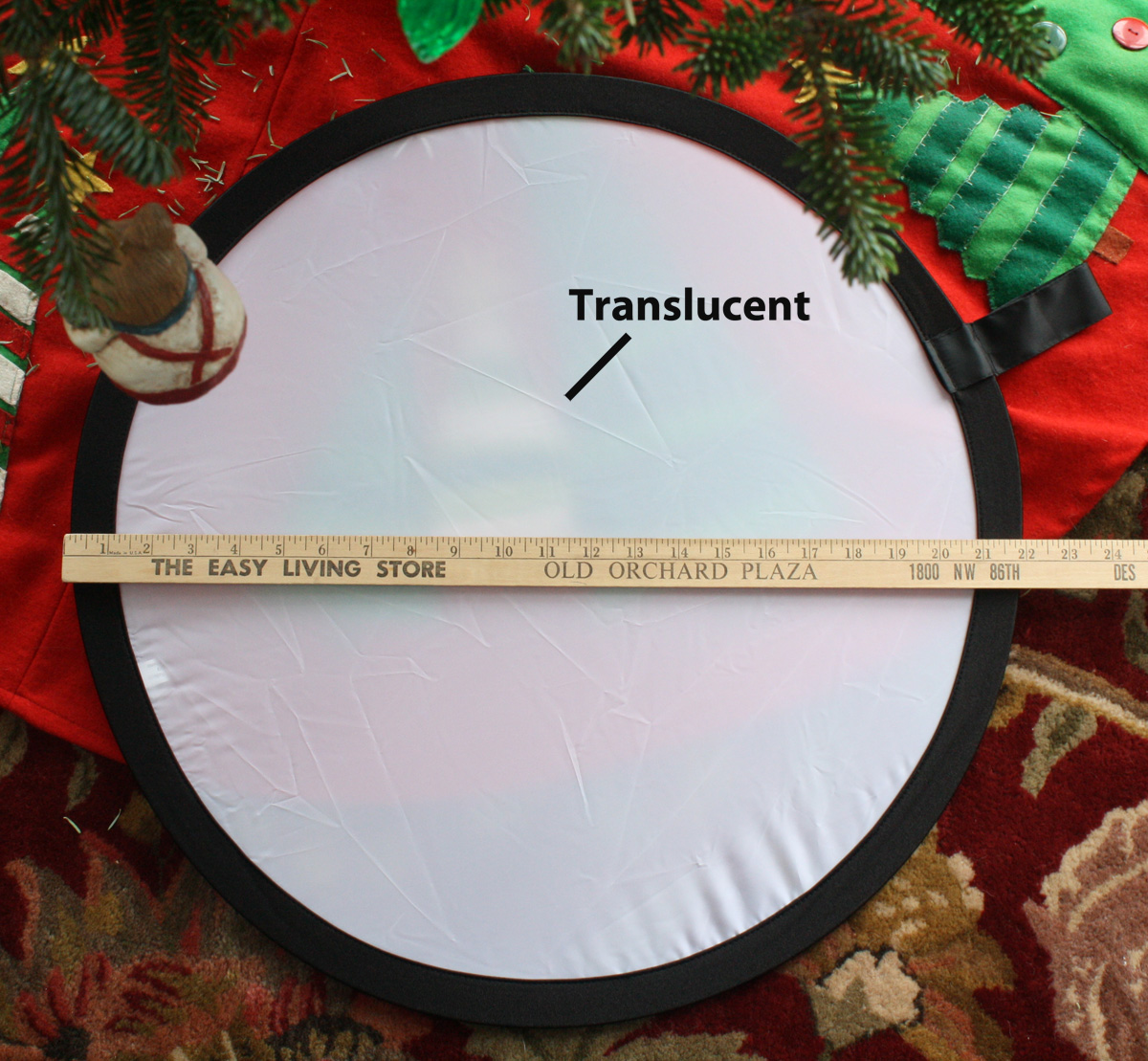
The 5-in-1 reflector disc is folded up inside this 9"-diameter zip bag. (Click photo to enlarge.)

It’s sort of ridiculous that I’m writing about this photography accessory because, although it was on my Christmas wish-list, I have never used one. Since my sister Peggy gave me this accessory for Christmas, and since it is blizzarding outside, I figured why not take this snow-day opportunity to procrastinate on other things by writing this post! (Really, the reason I am most excited about posting is because on Saturday or Sunday I plan to include a link to a hilarious…maybe?…depending upon how you look at it?… video demonstrating how to use this accessory.)

First things first.  The accessory that Peggy gave to me is one I learned about from Sam Wormley in my OLLI Photography Field Trip Class. It is a 22″ Impact [brand] 5-in-1 collapsible circular reflector disc.

The 22" translucent disc with collapsible outer rim. This may be used by itself, or in combination with the gold, silver, silver-gold, or white slipcover reflectors. The disc and slipcovers are packaged together in a zip bag as one item/purchase for about $25. (See the zip bag in the first photo. See the slipcovers below.)

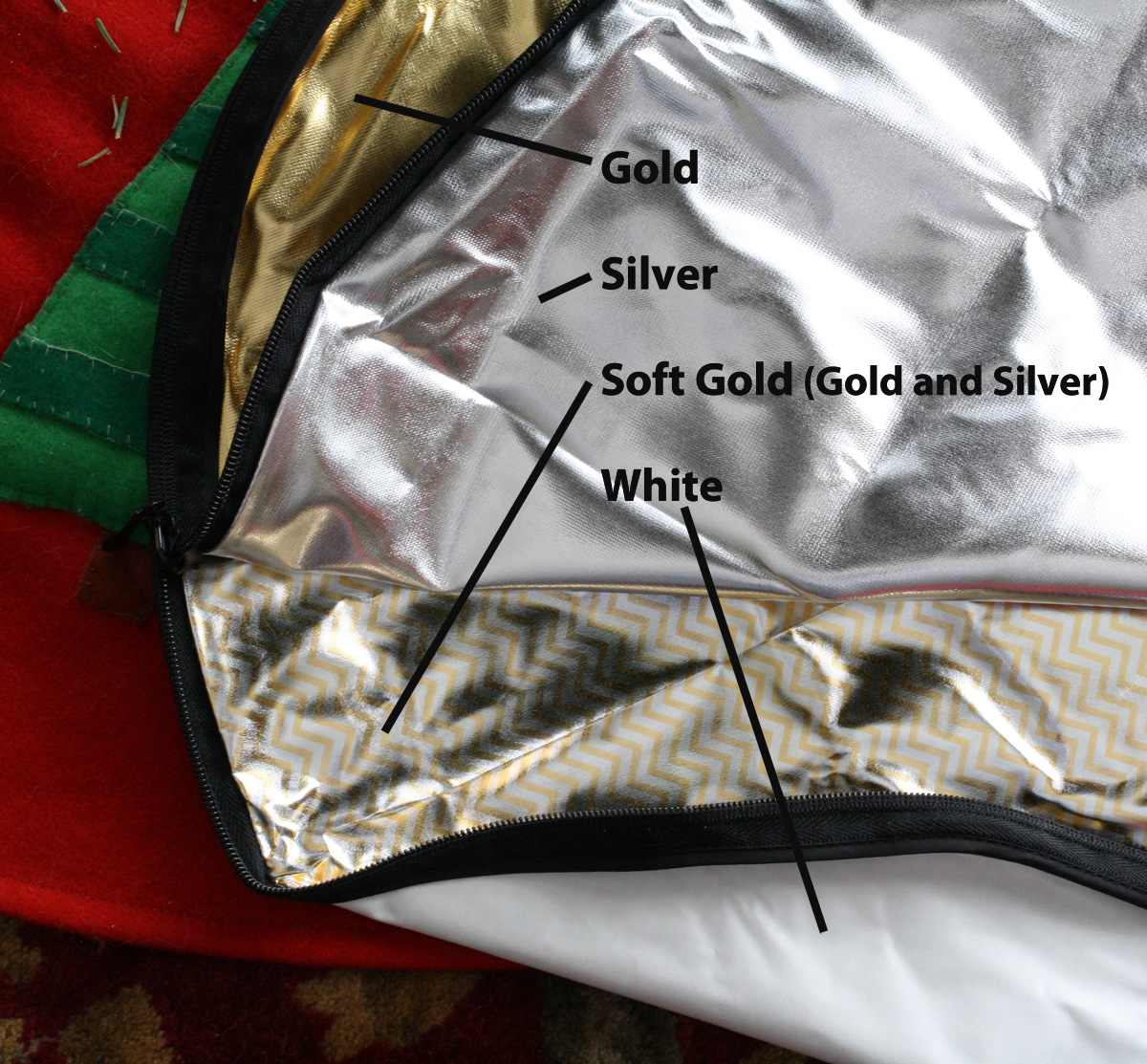
These slipcover reflectors may be used in combination with the translucent disc shown in the previous photo. (Click photo to enlarge.)

According to the “Features” section in the description of this accessory at www.bhphotovideo.com, this disc:

  • “…is versatile in … providing shadow-lightening detail in your subject, using available, or studio lighting. It starts out as a translucent white disc — perfect for softening direct sun, or lights without diffusion. Use the removable, reversible zippered slipcover to reflect light into shadow areas of your subject. Your choice of color — silver, gold, white, gold/silver mix — will be determined by the lighting conditions, and your personal preference.”
  • “This 22″ disc is suitable for head-shots, and small still-life setups. It folds down to 1/3 its open size, and comes with a storage sleeve. We suggest the purchase of a pivoting arm and stand, to hold the disc where needed — especially if you are working without an assistant.”

The http://www.bhphotovideo.com description continues with this when-to-use-which-slipcover information:

  1. Soft Gold combines gold and silver, creating a warm, summery feel that works great with skin tones.
  2. Silver increases the specular highlights and yields a high-contrast image. It’s perfect for video, product shots and B&W photography.
  3. Gold produces a natural, golden fill that is great for sunsets, jewelry, and indoor portraits.
  4. White produces an even, neutral-colored bounce light that works beautifully as a fill light source for both product shots and indoor/outdoor portraits.
  5. Translucent fabric is used to diffuse light, producing a broad light source and a soft, wraparound effect that’s perfect for outdoor portraits or whenever a softer light is needed.

Until I actually use the 5-in-1 reflector disc, I think I’ll still be a little confused. If you feel that way, never fear!  The video that I will link to will explain everything! If you care nothing about the reflector, but are game to be entertained, please stay tuned for this weekend’s video link.

(Click here to go to Louise Shimon’s blog’s home page.)