From Threshing to Teddy Bear Parade

September 3, 2011 by

I’m working on a post (or two or three) that will include a combination of photos and video from when Bill, Jackson (Bill’s and my grandson), and I went to the Albert City, Iowa, Threshermen and Collectors Show in August. Also, I’ve been scanning a couple more Rolfe school yearbooks. And, I’m looking for images to accompany an article that Clara (my oldest sister) wrote for posting here. All that plus I’ve been working on some other non-blog-related things. Oh, and this month I get to be at Jackson’s school when his class has its Teddy Bear Parade!

I’ll “see” you soon via another blog post.

Rolfe Newspapers Project: I’ll tell you the good news last.

August 30, 2011 by

As you may already know, in 2010 the Rolfe Public Library board endorsed the project of having 101 years of Rolfe, Iowa, newspapers digitized by Heritage Microfilm (HM) of Cedar Rapids, Iowa. In a sense, we had vetted this company, including knowing that HM handled all the newspaper microfilming for the State Historical Society of Iowa (SHSI).

In early December 2010, the Rolfe Public Library paid to HM one-half of the Rolfe newspaper project cost. The plan was that the images (pages) — from 101 years of Rolfe newspapers — would be online and keyword-searchable.* This project was to be completed by March 2011.

In late February 2011 the library board received a letter from HM stating that HM had moved much of its operation to Mexico. Ok…not great…but there wasn’t anything we could do about “our” newspaper project being worked on outside of the United States.

We (the library board and I) still believed the project would be completed in a timely manner. However, after the company kept defaulting on deadline after deadline, with persistence on our end, the company refunded all that the library had paid (again, one-half of the total project cost).

We remained in good faith that the project would be completed and be a quality product…until up popped many, many red flags. For example, online there is a letter issued in June by SHSI saying that SHSI was transferring all of its microfilm from HM to Advantage Information Management Solutions in Cedar Rapids. Also, umpteen other libraries were having problems with HM. And, complaints were being filed with the Better Business Bureau and with the Iowa Attorney General’s office.

Fortunately the library board had its refund, so was not out any money. (To my knowledge, none of the other libraries in the same boat have received a refund.) After more vetting, including knowing that SHSI had transferred to Advantage, the library board voted to terminate its relationship with HM and, following in the footsteps of SHSI, transfer its project to Advantage.

How soon will this project be completed?

By two months from now (so, around November 1, 2011) the Rolfe Public Library should have a searchable hard drive that contains images of all the Rolfe newspaper issues that are on microfilm.**

Until sometime in January 2012, these digitial files may be browsed/searched only within the walls of the Rolfe Public Library and not online. The files will be accessible to patrons and to library staff.

When will the newspapers be online?

Sometime in January, the files will be online and accessible throughout the world.

Yes, we are having to wait months longer than originally planned. But, it will be worth it!

What is the bonus?

A bonus is that the book Centennial History, Rolfe, Iowa, 1863-1963 will be included in this project. In other words, you’ll be able to browse/search the contents of this book online.

All is well that ends well! When there’s more to report, including completion of the project, I’ll post about it. Upon project completion, there will also be information on the Rolfe Public Library web site regarding how to access the newspaper files online.

May a person still contribute?

*Thank you to those of you who contributed to the project via a cash donation or by purchasing one or more prints of Mother’s (Marion Gunderson) watercolors. If you still want to contribute, you may do so by 1. writing a check payable to “Rolfe Public Library Trust” 2.) on the memo line write “newspaper project” and 3.) mail your check to Rolfe Public Library, 319 Garfield St., Rolfe, Iowa 50581. Contributions so far have ranged from $10 to $115 and all are greatly appreciated.

* * * * * * * *

**There can’t be a scan of any issue or page that isn’t already on microfilm, unless the hard copy of the newspaper is provided to Advantage.

Heritage Microfilm is associated with NewspaperArchive.com.

(Click here to go to Louise Gunderson Shimon’s blog’s home page.)
Scooping the Loop in Ogden, Utah … in 1937

August 20, 2011 by

Fall semester classes at Iowa State University begin Monday, August 22, 2011. Grandson Jackson starts kindergarten the same day.

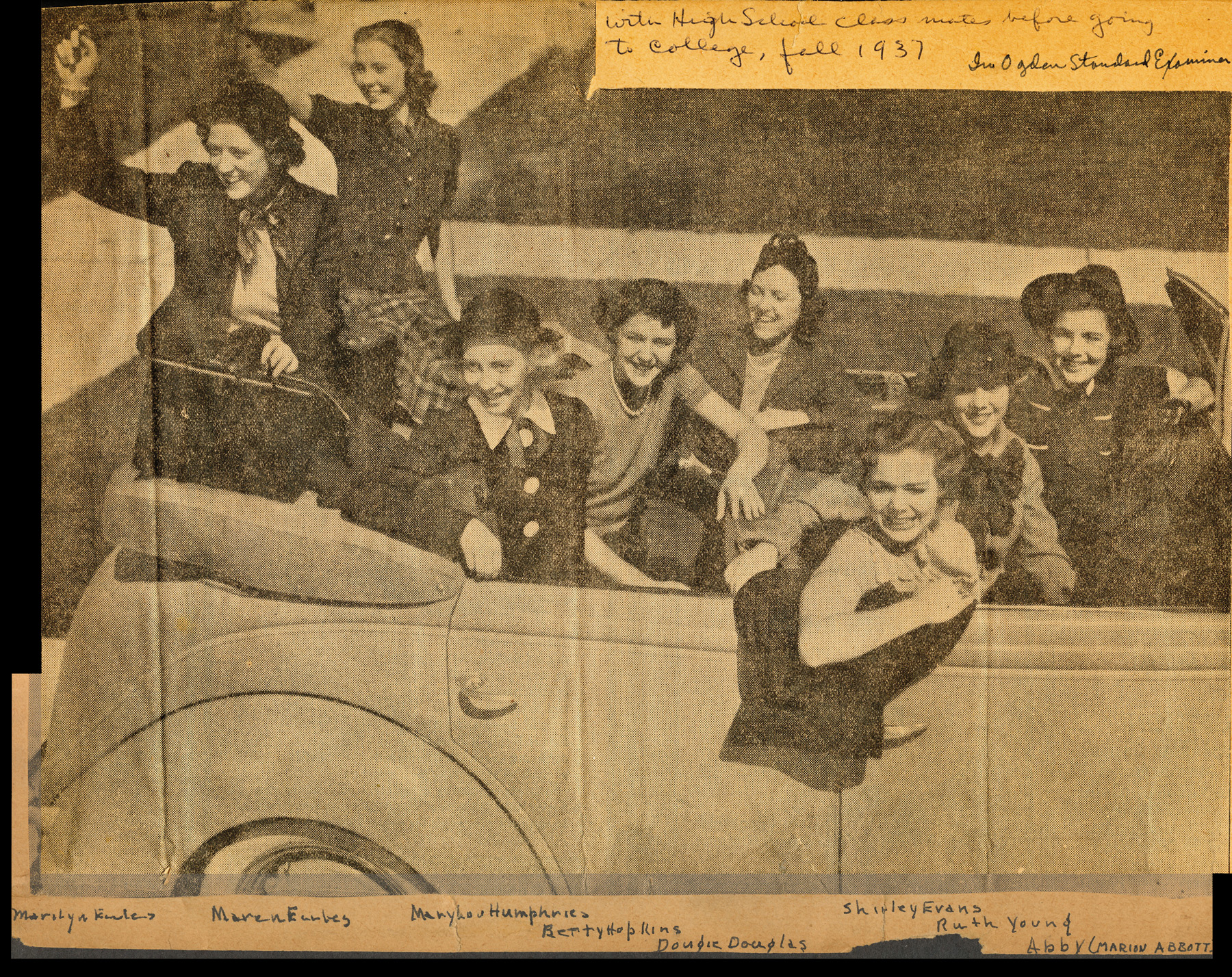
Pictured below is my mother Marion Abbott with seven of her class-of-1937 Ogden, Utah, “High School class mates before going to college, fall 1937.” Mother attended Iowa State College*, which was the alma mater of her parents.

.

Mother (Marion Abbott Gunderson) is behind the steering wheel in this photo. While I know Mother had a car to drive during at least her senior year of high school, I don't know if the car in this photo belonged to her or to someone else. According to Mother's handwriting at the upper right, this photo was taken in 1937 and appeared in an Ogden (Utah) Standard-Examiner newspaper. I don't think the writing along the bottom is Mother's, but I could be wrong. I believe the names written at the bottom are, left to right: "Marilyn Eccles, Maren Eccles, Mary Lou Humphries, Betty Hopkins, Dougie Douglas, Shirley Evans, Ruth Young, Abby (Marion) Abbott." (Click on photo once or twice to enlarge.)

.

In this 2-minute audio clip recorded in 1981, Mother and her lifelong best friend Betty Dix talk about “driving around” while they were in high school in the 1930s. In the clip, Mother’s is the first voice heard, then Betty’s softer voice.

Although she’s not in the photo (above), Betty Dix** was Mother’s best friend almost from birth. Both were in the Ogden, Utah, class of 1937. Before Mother and Betty were born in 1919, not only were their parents friends, but Betty’s and Mother’s grandparents had been friends.

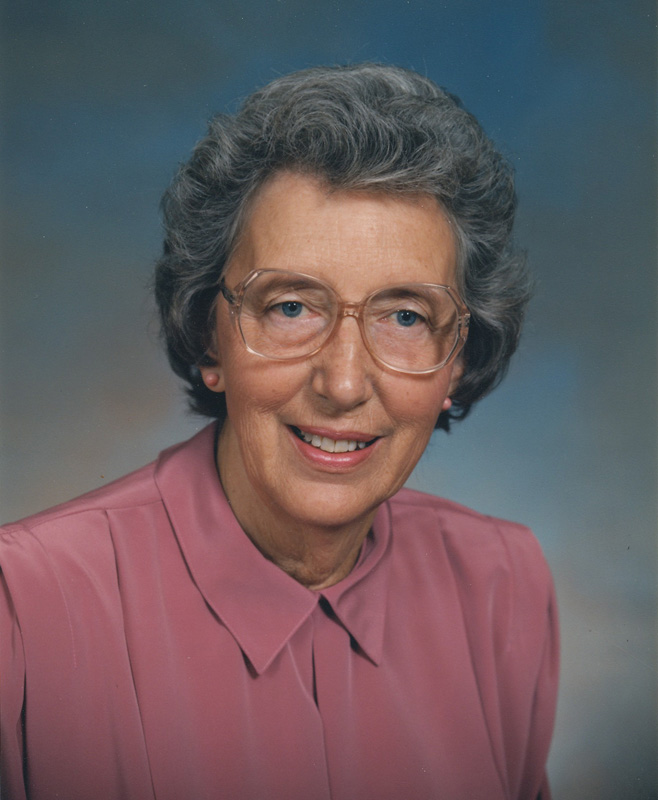
Betty Dix Kirley, late 1980s. Betty passed away in October 1999.

A 1920 photo*** of Mother and Betty when they were infants is included in this 1999 letter from Betty to Mother. The letter arrived in time for Mother’s 80th birthday celebration.

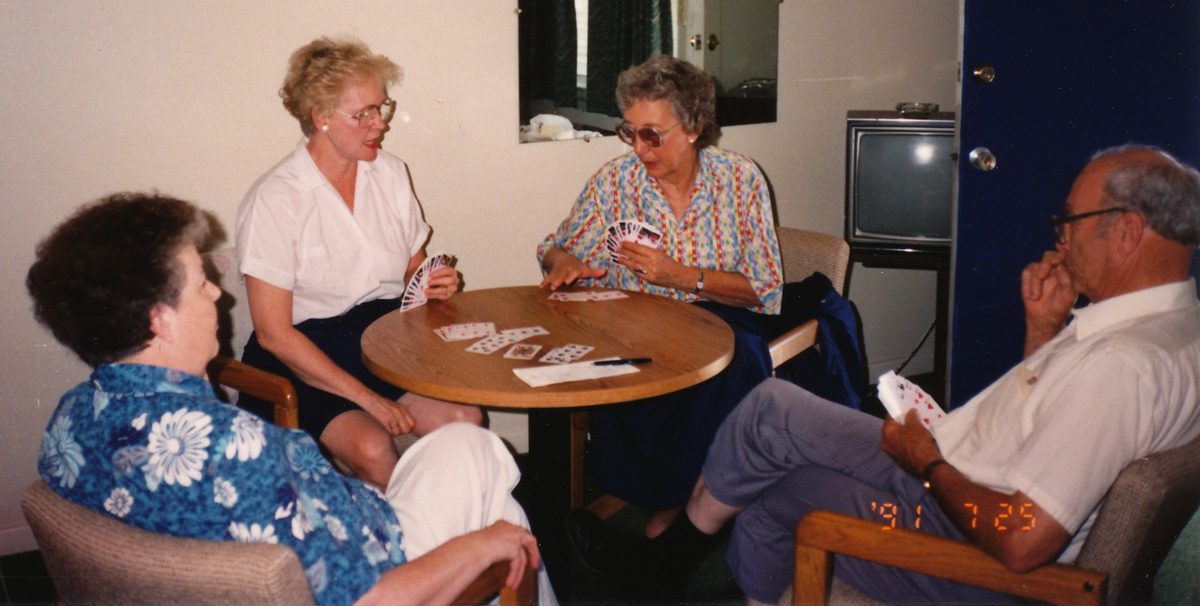
A 1991 photo of Betty includes (l to r) Mother, Mary Deane Wagner (a cousin of my dad’s), Betty and my dad playing cards (bridge?) during the weekend of my mom’s and dad’s 50th wedding anniversary celebration.

Betty, a victim of cancer, died in early October of 1999, just a month after sending her letter to Mother.

.

.

* * * * * * * *

*now Iowa State University

**Betty later married a man with the last name of Kirley. After they divorced, her name remained Betty Dix Kirley, but I always refer to her as “Betty Dix.”

***Mother as an infant is at left in the photo with the dark hair; Betty is at the right with lighter hair. The photo is at the bottom of the letter, requiring scrolling to view it.

(Click here to go to Louise Gunderson Shimon’s blog’s home page.)
August 14, 2011 by

I have a couple of things I’m wanting to post. However, they aren’t put together yet and Bill and I have family with us through Thursday. Hmmm…write a post or spend time with family. Family wins! I’ll post again sometime over the weekend. Unless, of course, I post sooner!

Steam Engine Oilers — John Wiegman — Albert City’s Threshermen Show (Aug. 12-14, 2011)

August 11, 2011 by

Last weekend Bill and I stopped in Alta, Iowa. There we saw this steam engine (at the bottom of this post) that, in its day, powered a threshing machine.

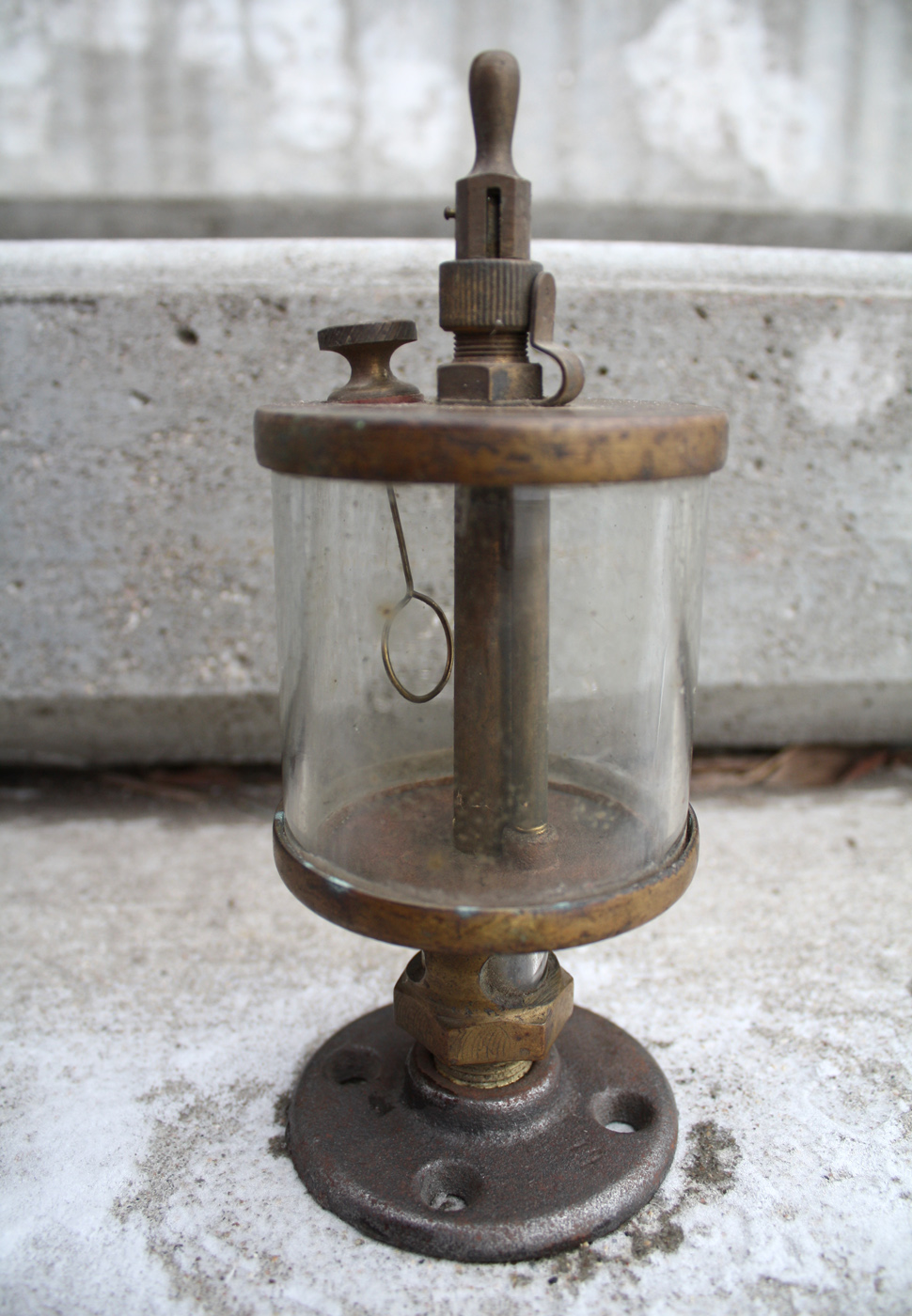
This was one of my Great-Uncle Art Gunderson's steam engine oilers. (Click on photo to enlarge.)

In a previous post, I told about the two steam engine crankshaft oilers that my dad, Deane Gunderson, gave to me. These oilers are from the steam engine owned* in the early 1900s by my Great-Uncle Art Gunderson (who, by the way, was a captain of the University of Iowa football team). One of those oilers is pictured at left.

In the foreground of the first photo (below), a brass and glass steam engine crankshaft oiler (similar to mine) is visible. Just behind it, you can see the top of another oiler on the other side of the engine. Silly me always thought there was just one oiler per steam engine. Now I realize there was more than one area on a steam engine that needed to be oiled; therefore the steam engines had multiple oilers.

John Wiegman, a friendly Rolfe native born in 1928, wrote the following in his book titled Three to the Hill: Growing up in Iowa 1928-1946. This excerpt is from his two-page chapter titled “The Threshing Run.”

Late July and early August—the very hottest time of the Iowa summer—was oat harvesting time. The reaping, threshing, and hay-stacking operation during an oats harvest was extremely labor intensive. The threshing machine itself was a shared piece of equipment, fired with wood and coal—a noisy, hot steam-breathing beast of a machine that required constant oil injections to keep it running.

Two paragraphs later John wrote, “But labor and machinery weren’t the only things that were shared on the threshing run.” Click here to read the two pages of John’s memories regarding threshing. At the same link is the cover of Three to the Hill as well as John’s foreword.**

I hope to have more to report about threshing after I go to Albert City’s August 12-14, 2011,  Threshermen and Collectors Show.

.

At least two of the steam engine oilers are seen here. One is in the foreground and is made of brass and glass. Just the brass top of another oiler is seen in the background. (Click on photo to enlarge.)

.

(Click on photo to enlarge.)

.

This is where the operator would stand to put wood or coal into the steam engine receptacle. The steam subsequently produced would drive the piston which would, in turn, drive the pulley which was connected via a belt to the thresher. The belt transferred the power from the steam engine to the thresher. Drats that I didn't get a photo of the pulley. Maybe this weekend... (Click on photo to enlarge.)

.

(Click on photo to enlarge.)

.

.

*I recently read the transcript of my Great-Aunt Martha’s early-1980s oral history. She said the “threshing machine” was owned by C.L. Gunderson (my great-grandfather) and that C.L.’s son (Martha’s brother), Arthur, “ran it” and “was given the profits earned from the threshing machine.”

**Posted with permission from John Wiegman.

(Click here to go to Louise Gunderson Shimon’s home page.)

An Evening with the Sioux City Explorers (You Make the Call!)

August 7, 2011 by

Friday night, August 5th, Bill and I attended the Sioux City Explorers‘ minor league baseball game. The Explorers are in the Central Division of the American Association of Independent Professional Baseball. (You can read about the history of the Association here.)

The Explorers lost to the Wichita Wingnuts by a score of 3-5. Even though “our” team (“our” only because it’s an Iowa team) lost, we still had a great time. We had first-row seats just a hair to the third base side of home.

Friday night was the first time I experimented with a dSLR camera to take action shots of a sport event. While the net behind home plate protected us from foul balls, it also provided a challenge for taking photos. For my first time out, I’m pleased with the photos, and with what I learned regarding action shots.

According to umpire Lance Vaughn, in the following series of photos Sioux City’s #5 Ryan Priddy was “out.” This was after the umpire apparently called Priddy “safe.” You can imagine the uproar by the crowd (a very sparse crowd) after the final ruling.

The second photo shows the edge of the catcher’s glove about waist-high just to the left of the umpire. It seems unlikely that the runner was tagged in time. The article at this link reports the umpire said Priddy never touched home plate. Hmmm.

Last summer Bill and I went on our own mini-baseball tour, watching four minor league teams in as many evenings. While we had a fun, relaxed time Friday night watching the Explorers, between last summer and this summer, the atmosphere of the Burlington Bees remains our favorite.

.

Sioux City's #5 Ryan Priddy is sliding into home. Click on photo to enlarge.

.

The catcher's glove is about waist-high just to the left of the umpire's torso (i.e., between his shirt and his elbow). The umpire ruled Priddy was "out" saying he never touched home plate. Click once on photo to enlarge. Twice to enlarge even more.

.

The Sioux City runner's torso is over home plate. Click on photo to enlarge.

.


Photo info for all three photos is as follows. Shutter: 1/1600; aperture: f/2.0; focal length: 135mm; ISO: 3200. I first focused on home plate. Then, before the play, I switched from auto-focus to manual so as to maintain the same focus throughout the anticipated play at home.

(Click here to go to Louise Gunderson Shimon’s blog’s home page.)
A NW Iowa Anomaly: Hard Red Wheat Harvest

August 4, 2011 by

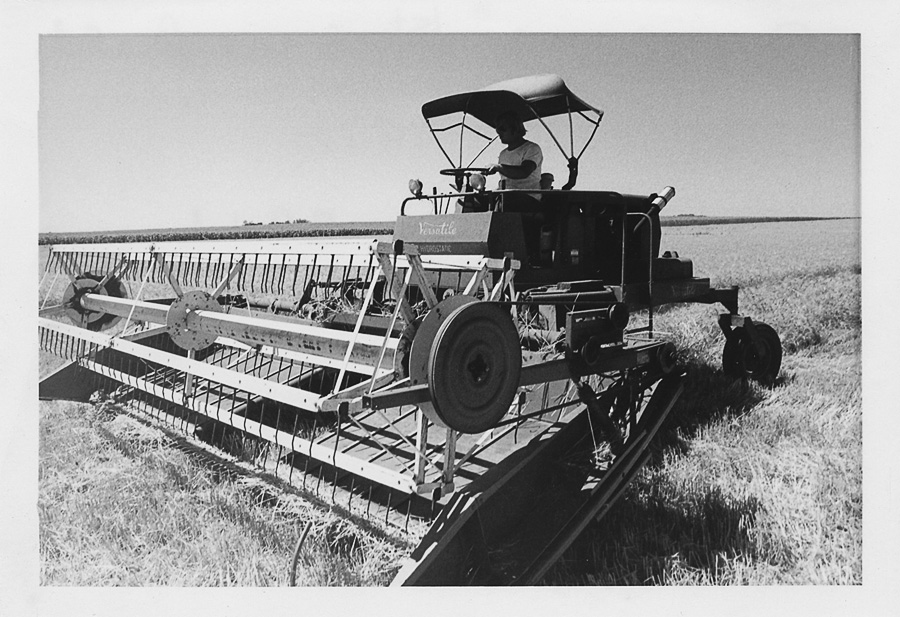
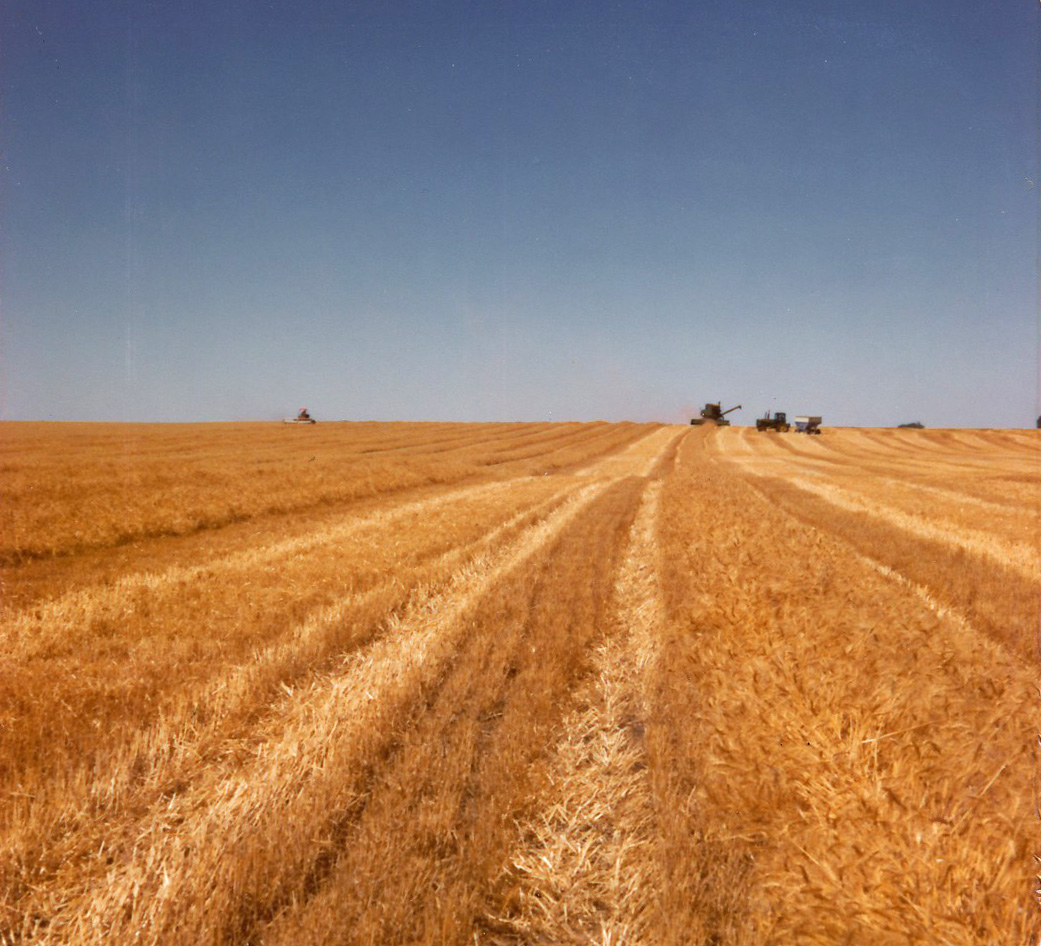
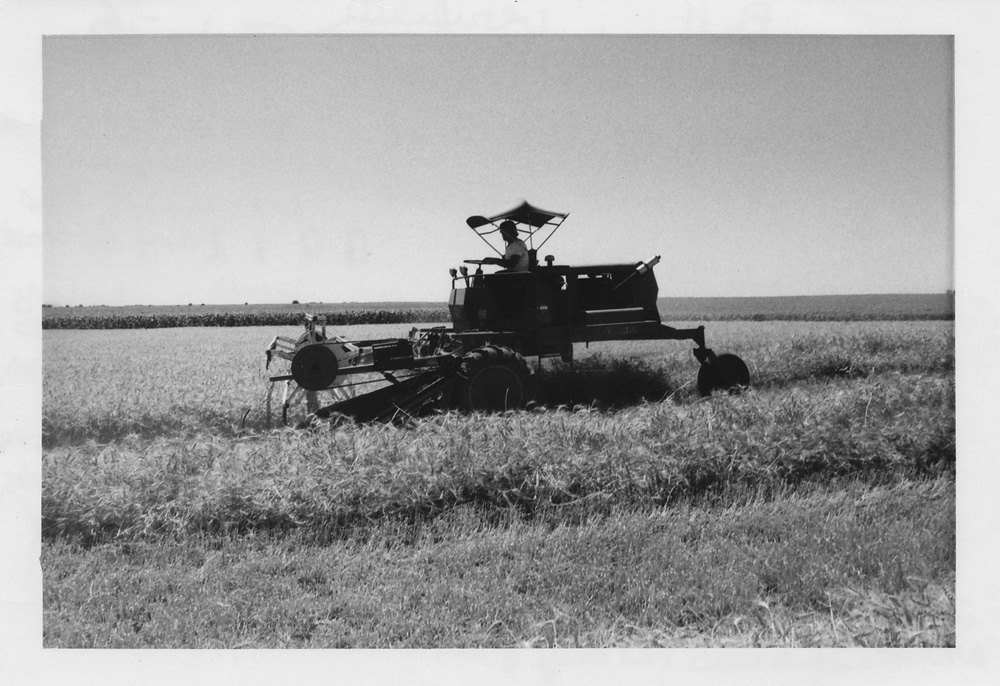
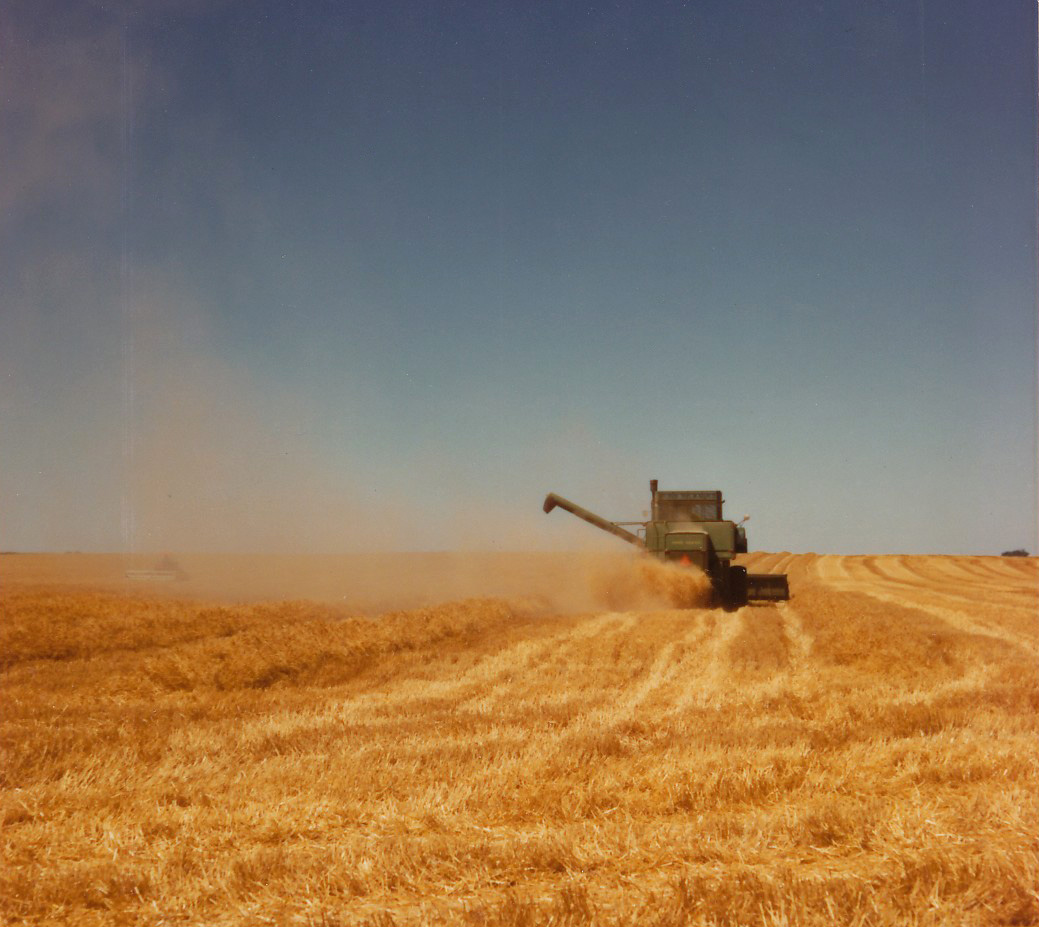
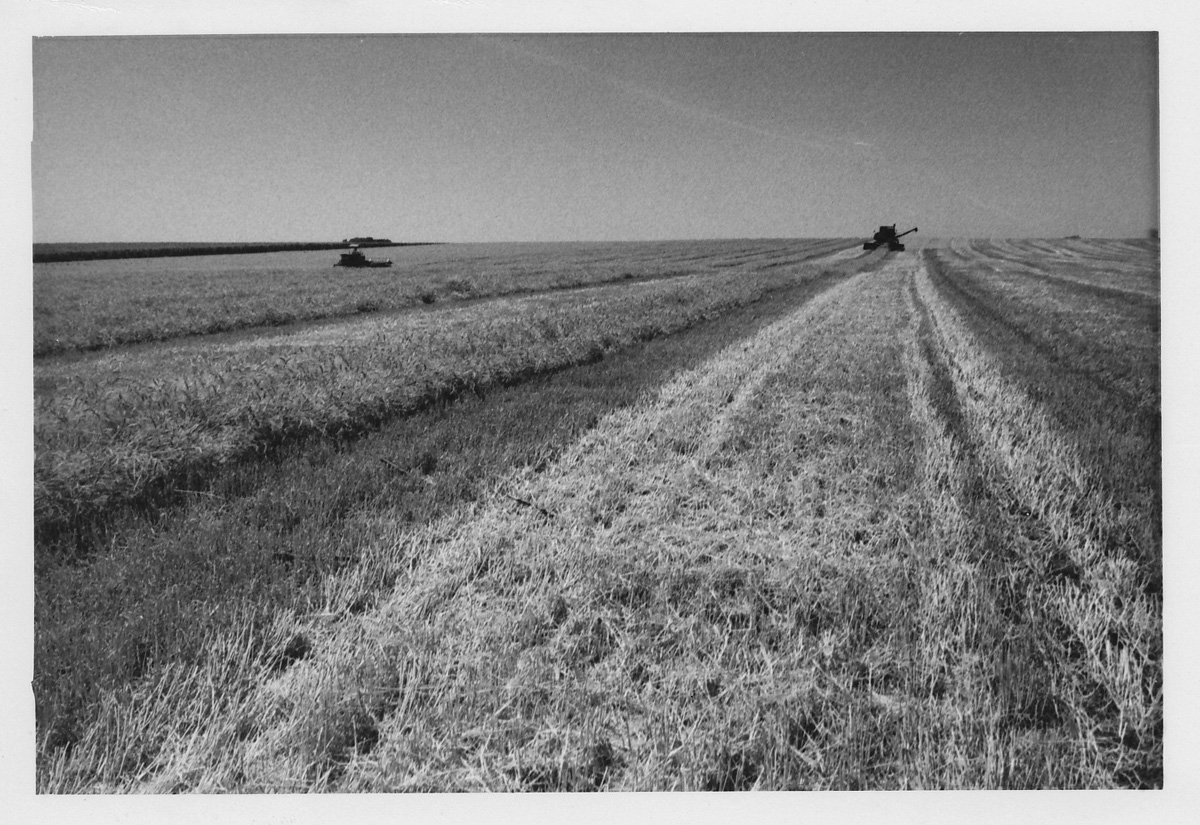
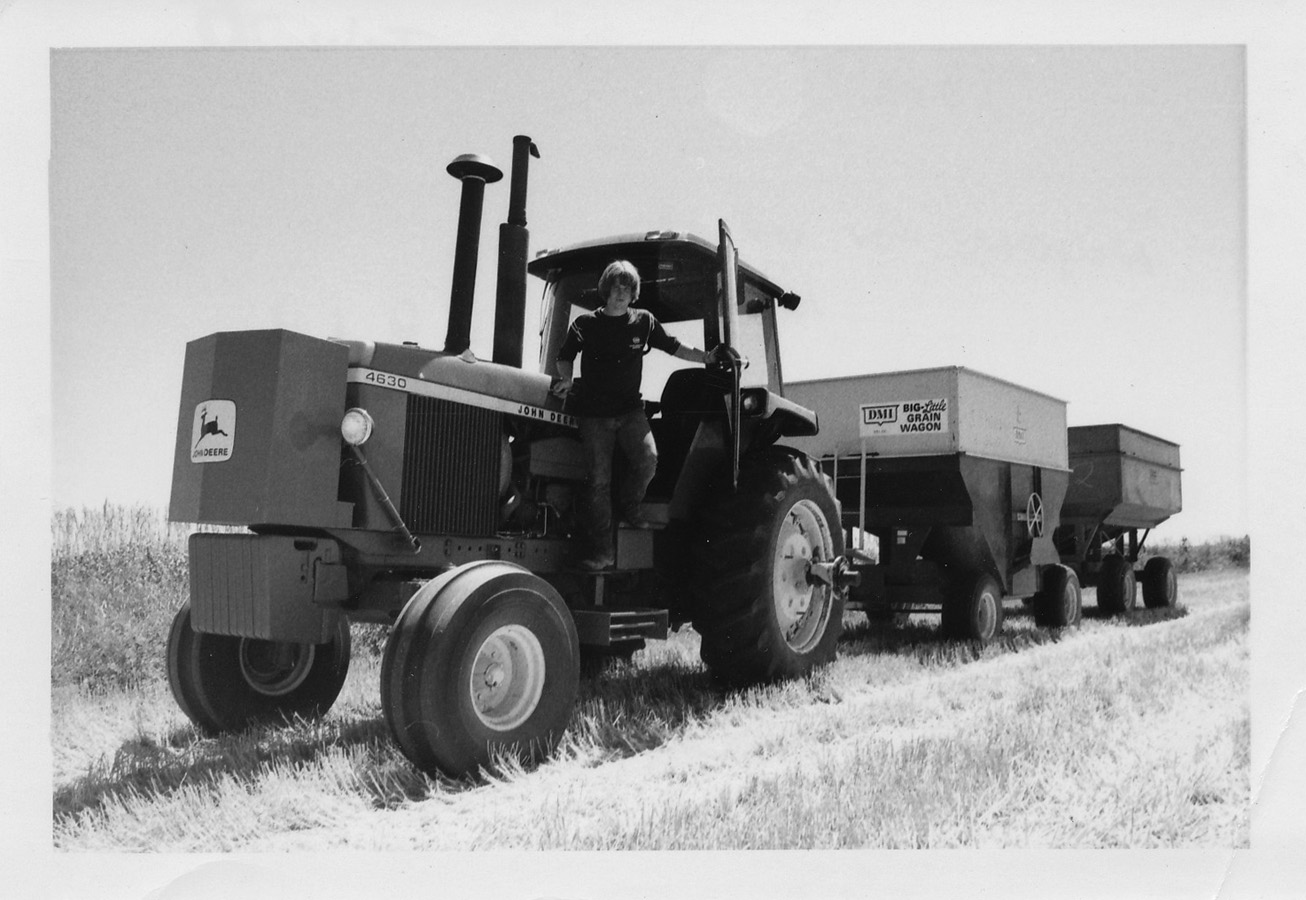
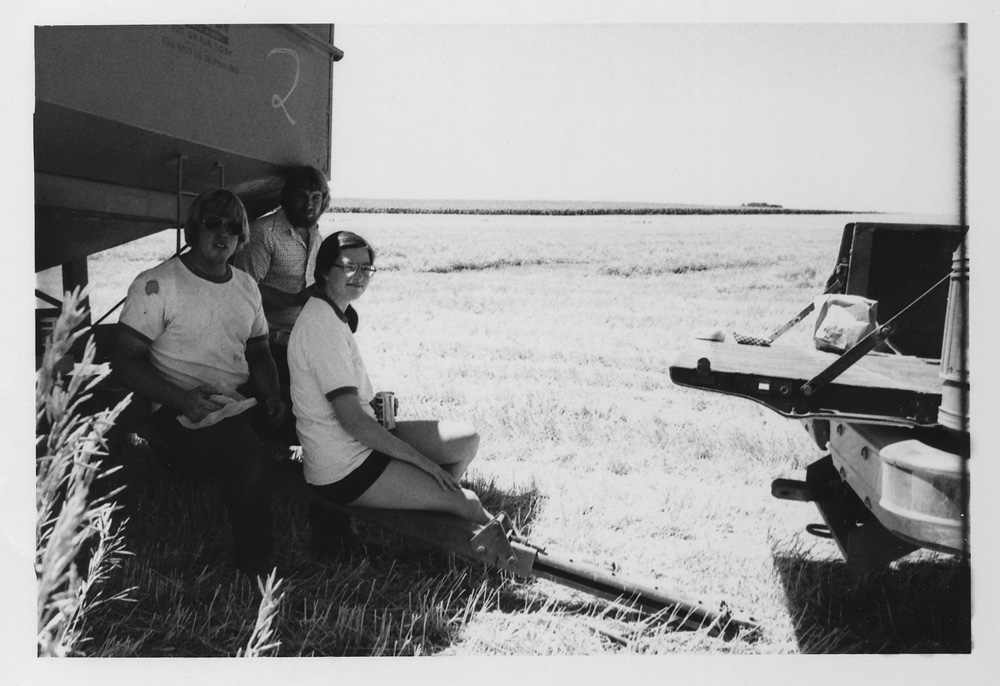
The photos below are of Bill Shimon’s (my husband) July 23 and 24, 1976, wheat harvest. The location is Section 23, Roosevelt Township, Pocahontas County, Iowa*.

Growing wheat in northwest Iowa was, and still is, very unusual. With corn prices recently surpassing wheat prices, I thought it a perfect time to tell about Bill’s 35-years-ago wheat crop.

* * * * * * * *

The audio at the links immediately below explains the photos better than the captions do.

Part I audio (6 minutes): Where and why Bill raised wheat, how it was marketed and to where it was transported, why oats are not grown as much as in earlier years, and a summary regarding different kinds of wheat.

Part II audio (5 minutes): A description of the operation in Photo #2, below, and an explanation of the machinery Bill used, including his own engineering.

Part III audio (4.5 minutes): The moisture content, test weight and yield of Bill’s 1976 wheat crop, as well as a brief discussion regarding protein in wheat.

* * * * * * * *

Bill got his start in farming at the age of 12 or 13 years (about 10 years before these photos were taken) when he, along with one of his brothers, first rented farmland.

At the time of the photos below, Bill was 23 years old and involved in a farming operation with his dad and brothers. Subsequently, Bill had his own farming operation until 1985 when he embarked on his farm management career**.

I hope you’ll listen to and enjoy the audio. I know that some of the photos below are a bit redundant, but I’m posting all of them for the sake of posterity.

Clicking on any of the photos will enlarge them.

.

Bill is swathing (windrowing) wheat with a swather. The swather cut the wheat leaving a stubble of about 6" to 9". The swather then placed the rest of the wheat plant on top of the stubble in an approximately 3'- or 4'-wide row called a swath.

.

Photo #2: The operation in this photo is described by Bill in the "Part #2" audio segment. The camera is "looking" west.

.

Between the stubble at the bottom of this photo and the swather is a swath.

.

To the left of the combine is a swath. The swather is at the far left.

.

The combine is moving toward the camera and is picking up a swath. The swather is at the left.

.

Bill's second-to-the-youngest brother Tom is pictured. As is still the norm, the moving combine dumped the grain into the also-moving wagons, i.e., on-the-go.

.

The pickup that picked up the swath is the kind of nubby looking thing at the lower left of this photo. Because the swath is only 3' or 4' wide, the outer portions (ends) of the much wider bean head (technically called a grain platform) were not involved in this wheat process. The pickup picked up the swath and fed the swath through the middle of the bean head (which is at the far left just behind/above the auger in this photo) and into the combine. In this photo you can also see, to the right of the pickup, the round hydraulic motor. Bill engineered the attachment of the hydraulic motor to the pickup. This photo is a very atypical scene, since almost always the combine dumped grain into the wagon while both were on-the-go, instead of both being stationary as in this photo of Bill's brother, Mike.

.

L to R: Bill, Mike (Bill's next-younger brother) and I (Louise) are having lunch in the field.

.* * * * * * * *

*This location of this wheat field is between the towns of Rolfe and Pocahontas in northwest Iowa.

**I had several paragraphs written telling about Bill as a farm manager. However, my enthusiasm regarding how he interacts with the land, his clients and his farm operators sounded kind of gushy. I’ll just say that his work ethic and management style involve getting his hands dirty…a lot.

(Click here to go to Louise Gunderson Shimon’s blog’s home page.)

Central Iowa Perry  Des Moines

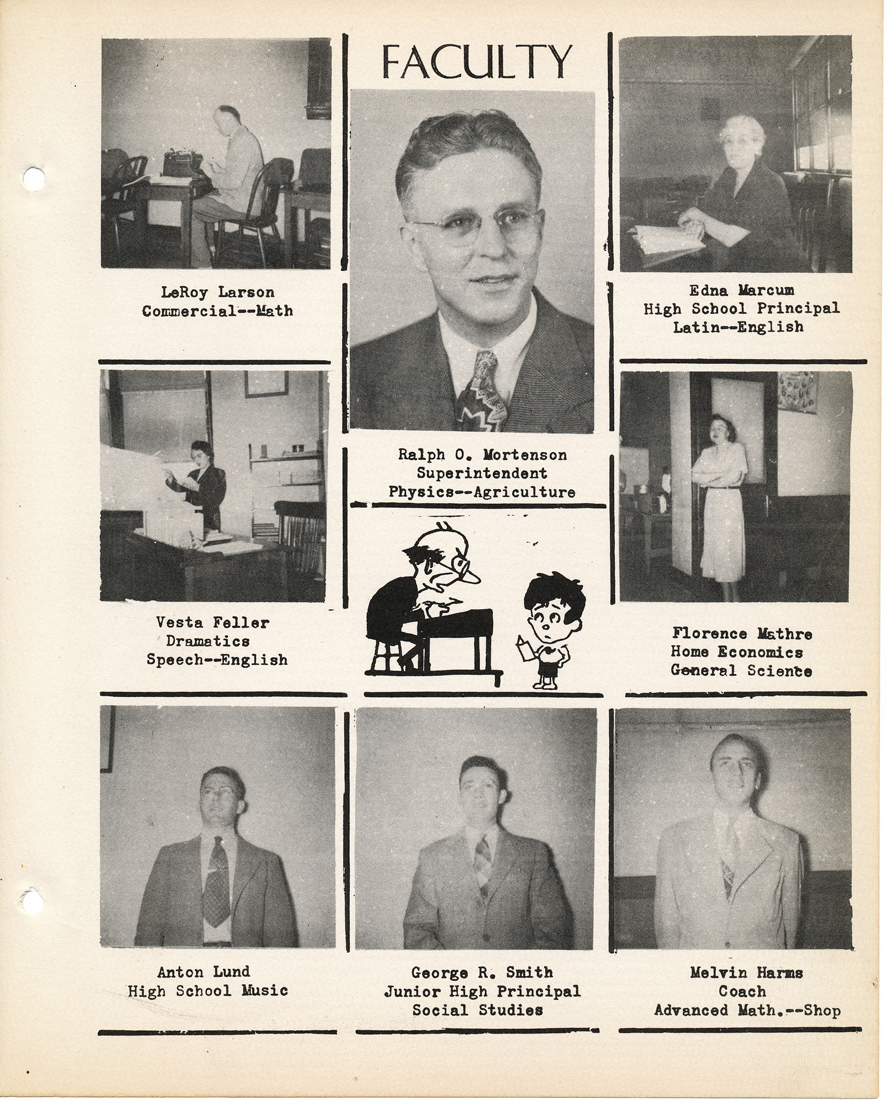
1949: Marion Gunderson’s Watercolors and Rolfe, Iowa, School Yearbook

July 26, 2011 by

This is the first in a series of posts in which I will include from the same year:

  • images of watercolors painted by Mother (Marion A. Gunderson), and
  • the Rolfe, Iowa, school yearbook. (Scroll down quite a ways to get to the yearbook.)

To look for Rolfe yearbooks by decade, you may go to this blog’s home page and, in the column at the right, click on one of the yearbook decade links (e.g., “1940s”). So far there are only two yearbooks posted at this blog, the other one being 1966-67.

I don’t know how soon I’ll post another watercolor/yearbook combination. By the time of Rolfe’s 2013 sesquicentennial, I hope to post every Rolfe school yearbook to which I have access, at least through the ’70s. Time to scan and public interest will be telling factors.

If you know of any Rolfe school yearbook(s) looking for a home, please check with Penny at the Rolfe Public Library to see if any are needed/wanted (712-848-3143). Or check with me to see if I need any for scanning and returning … or keeping if a return is not desired (mariongundersonart@gmail.com).

On a similar note, if you or someone you know has a watercolor painted by Mother, if you’d make me aware of it, I’d appreciate it. I might ask for a snapshot, or maybe even to make prints. I never ask to keep a painting, although twice that has been offered, for which many of my family members are thrilled.

It’s no secret that I have a passion for promoting prints of Mother’s watercolors, with the profits going to the Rolfe Public Library. I also am passionate about promoting Rolfe, in general.

.

The Year of Watercolors: 1949

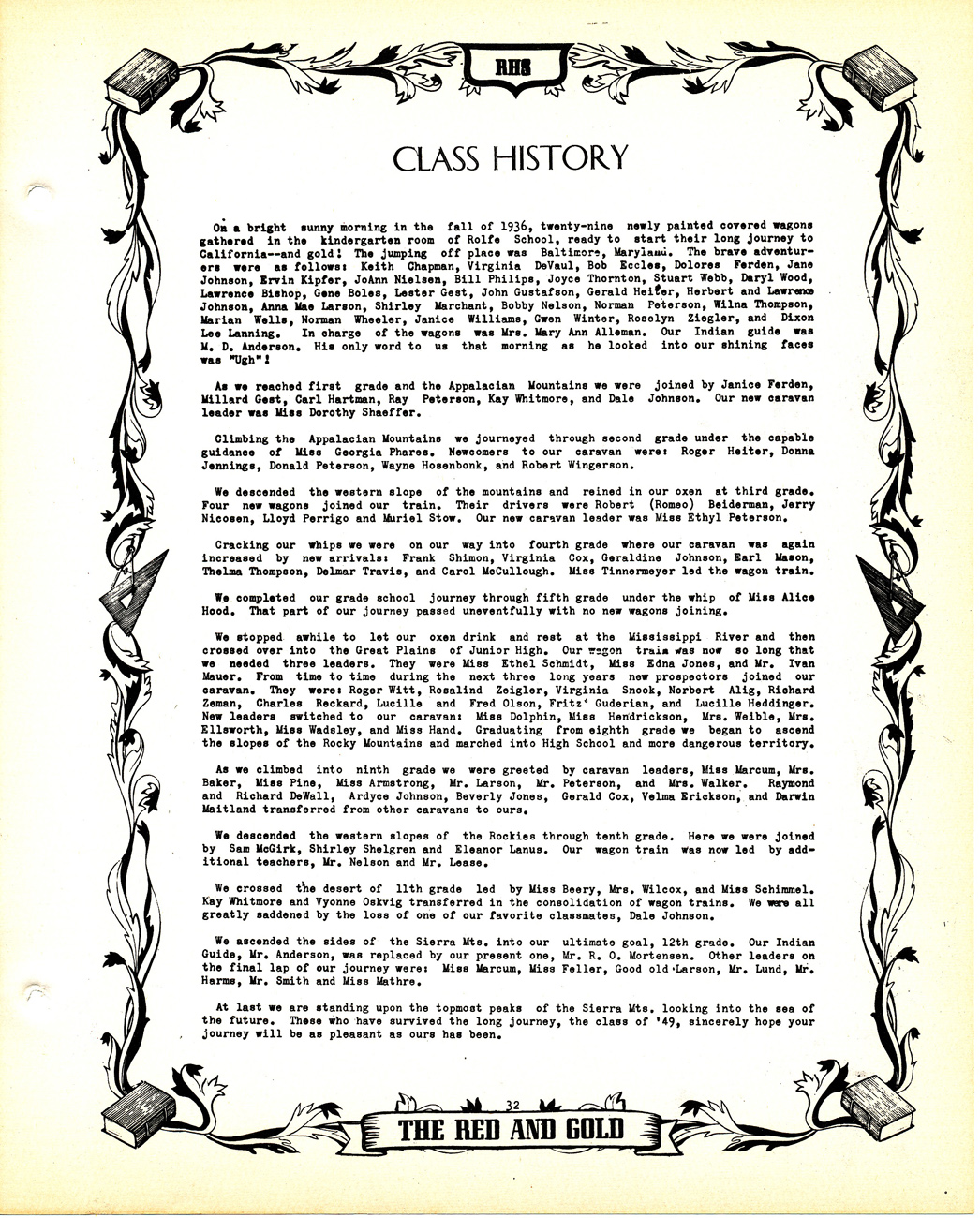
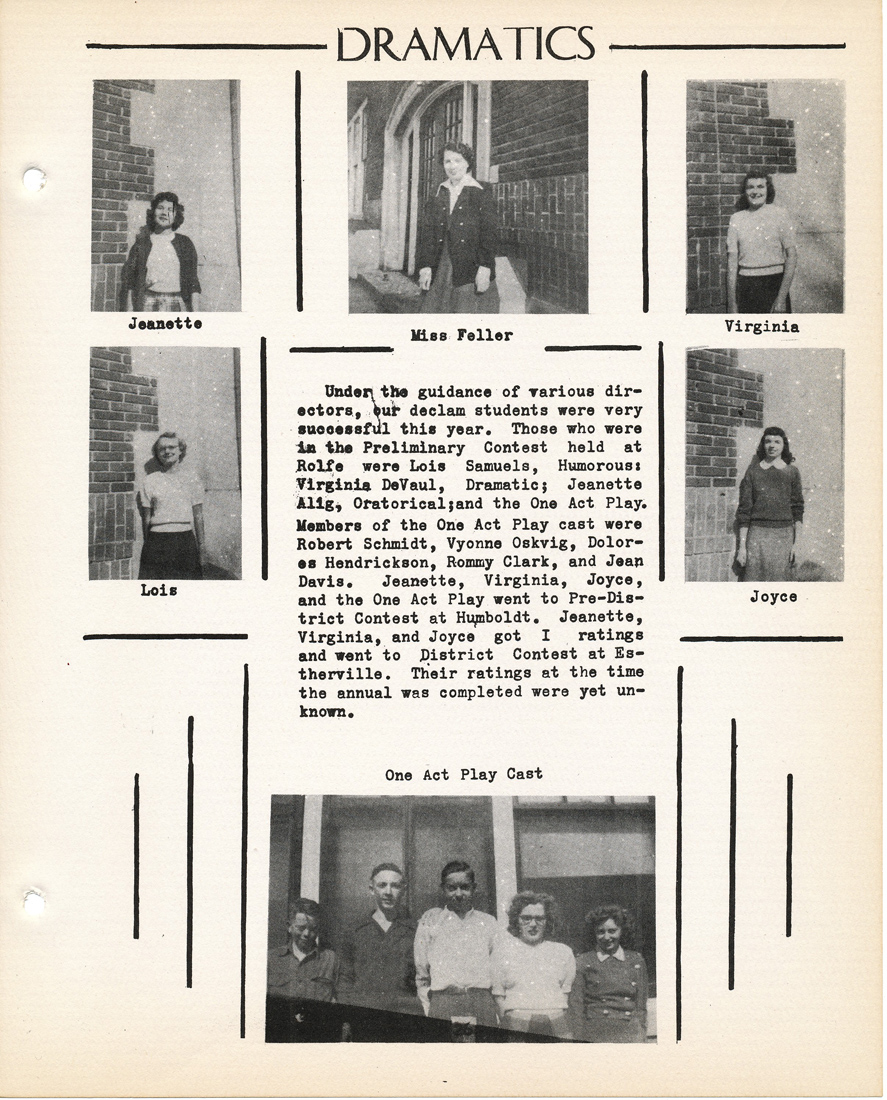
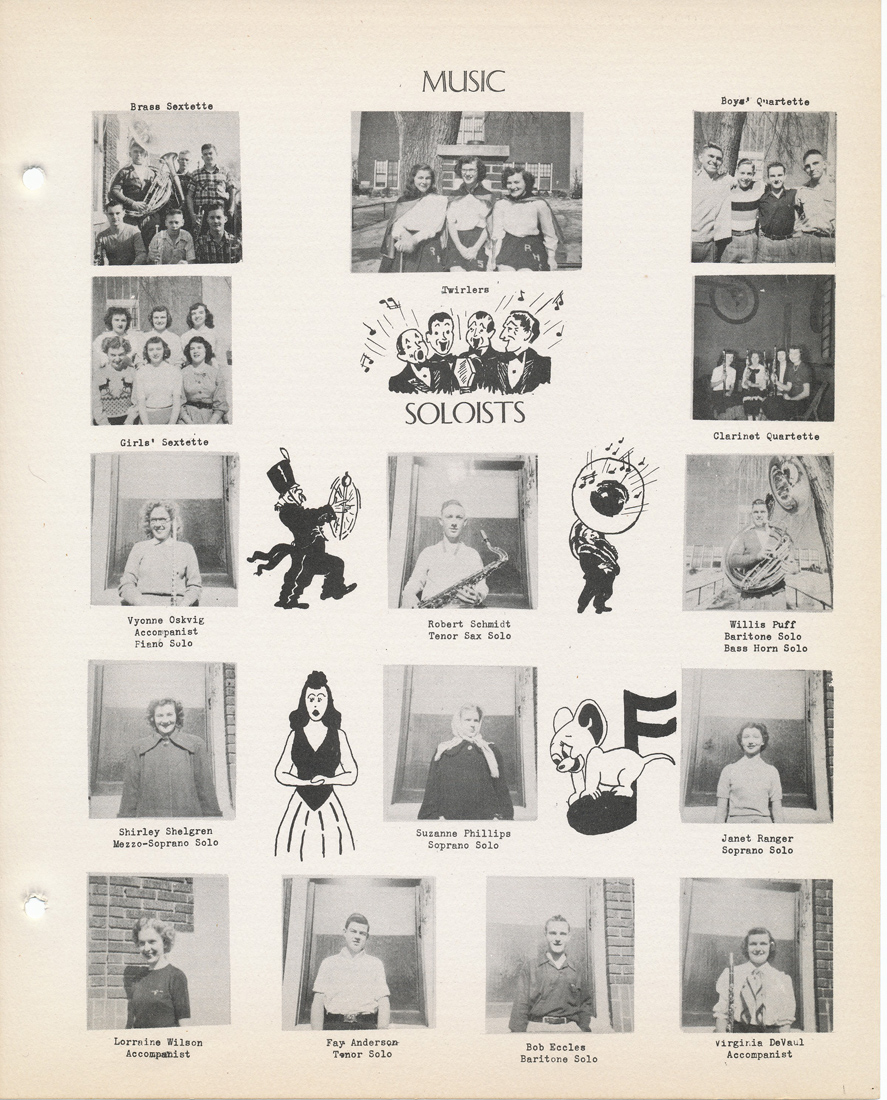
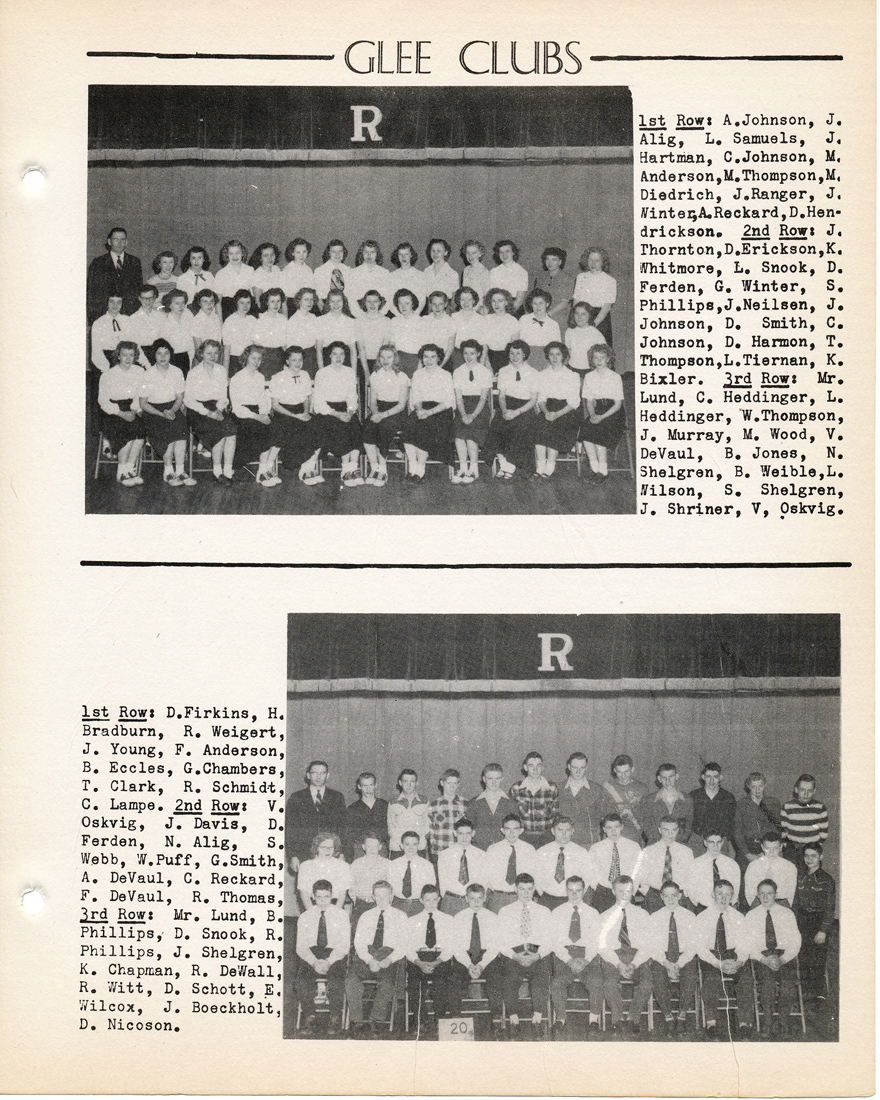
The Rolfe School Yearbook (scroll down): 1948-1949

.

You may read about Clara’s, my oldest sister, discovery of Mother’s 1949 Ear of Iowa Corn (below) in three posts: Part I, and Part II, and Part III.

Ear of Iowa Corn, watercolor by Marion Gunderson, 1949. Prints are available.

.

Next is my dad’s (Deane Gunderson) bowling ball, bag and one of his shoes. He bowled in a league in Waterloo, Iowa, in the early 1940s. He continued to bowl when he and Mother moved back to the farm in 1945. While we’ve always had this 1949 Bowling watercolor, because it had been tucked away for a while, it now seems nostalgically fresh.

Bowling, watercolor by Marion Gunderson, 1949. Prints are available.

.

You can read about the following two grain elevator 1949 watercolors (of the same Pocahontas, Iowa, grain elevator) here.

Grain Elevator II (Pocahontas, Iowa), watercolor by Marion Gunderson, 1949. Prints are available.

.

Grain Elevator I (Pocahontas, Iowa) watercolor by Marion Gunderson, 1949. Prints are available.

.

The next two images are also of watercolors Mother painted in 1949. Clicking on them will enlarge the images, as is the case for any image in this post. I think these two watercolors, especially that of the rag doll, are not typical of Mother’s style of painting.

.

.

.

.

.

.

.

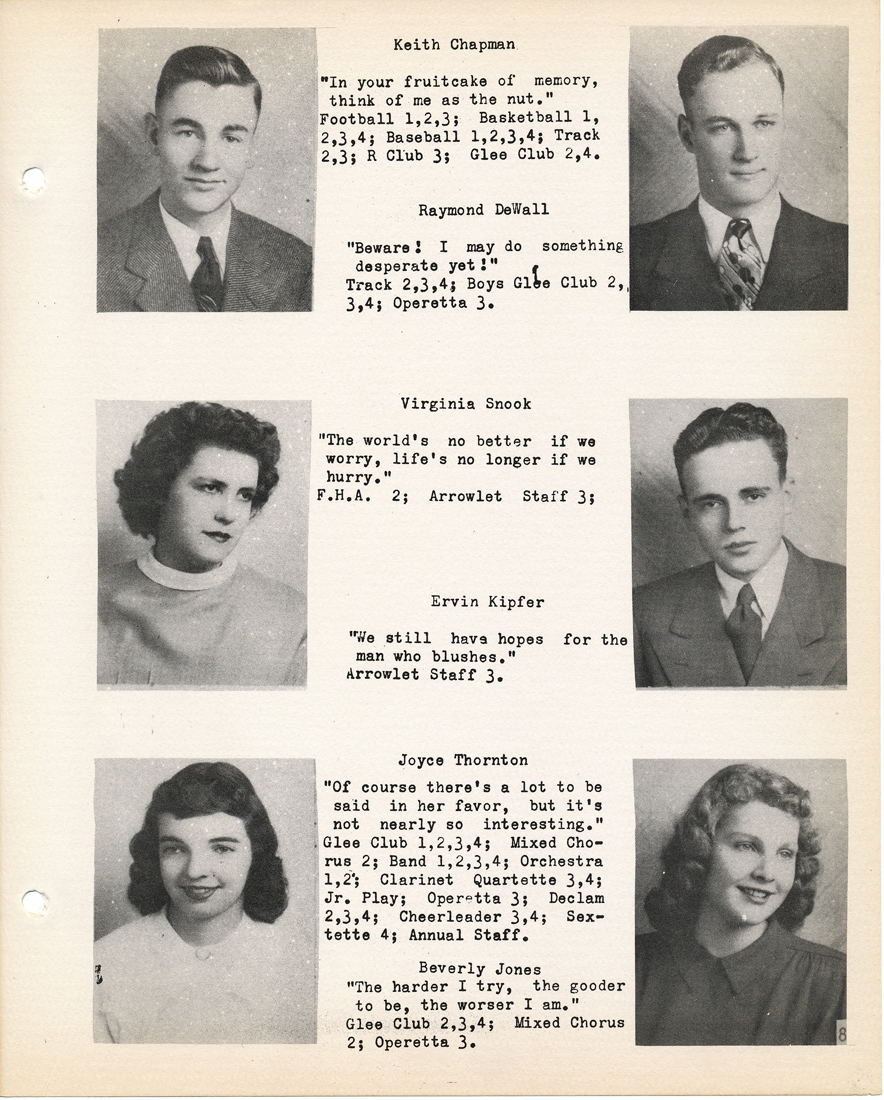
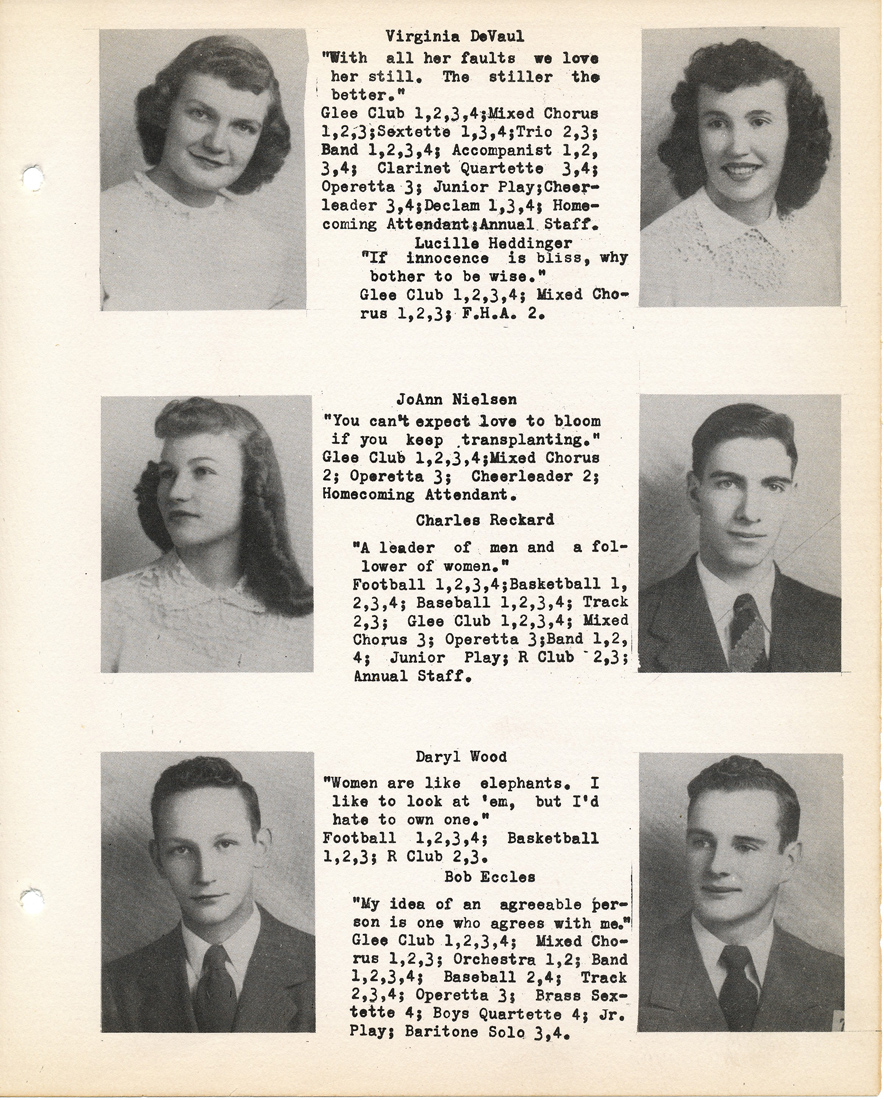
1949 Rolfe School Yearbook

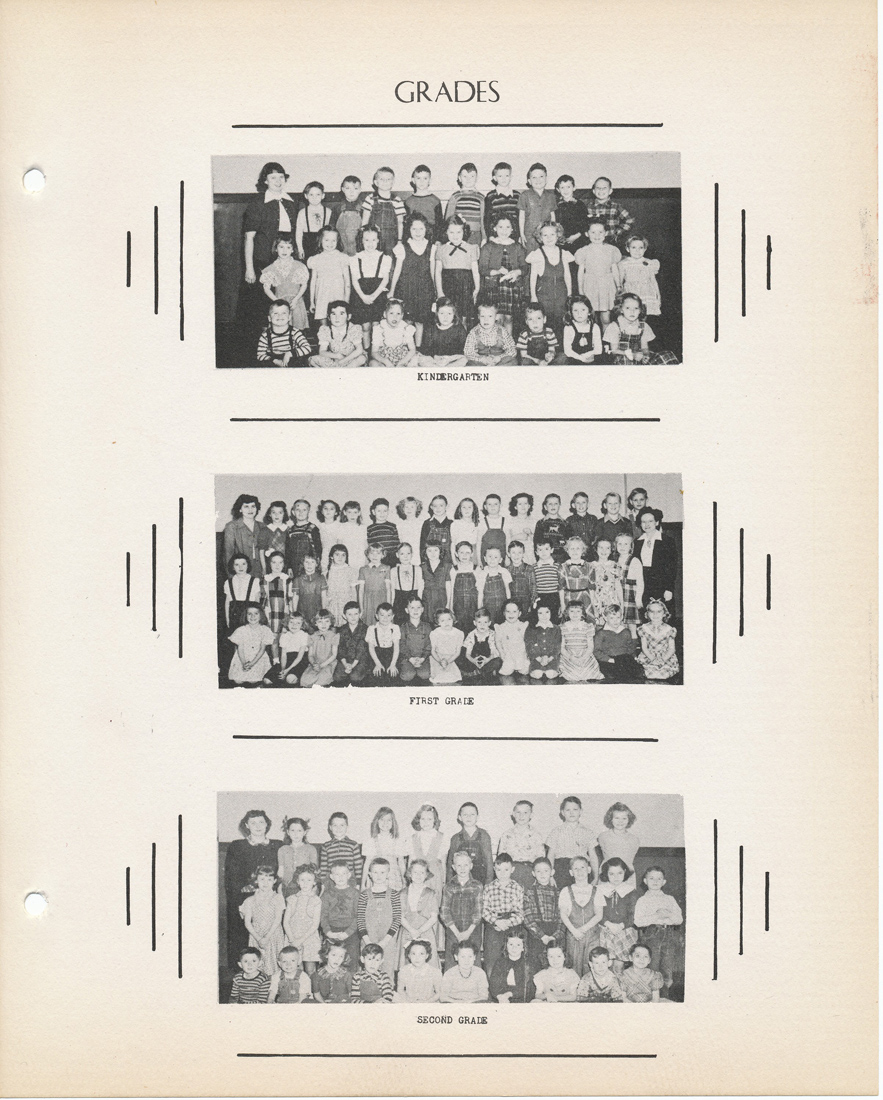
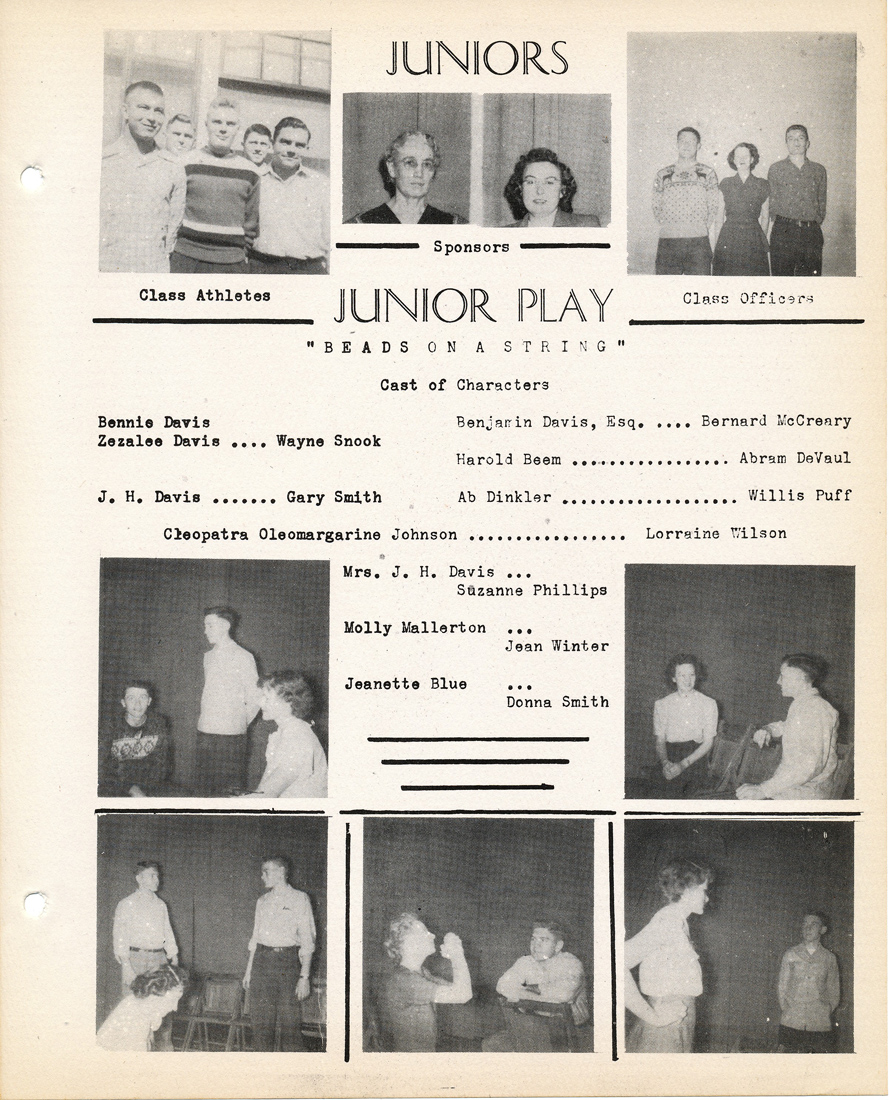
The images (below) from the 1948-49 Rolfe school The Red and Gold yearbook are a little fuzzy. The pages are a little textured, not of glossy paper like current-day yearbooks. Still, they provide a yester-year trip back to Rolfe. Remember — clicking on the images enlarges them. Have fun!

.

.

(Click here to go to Louise Gunderson Shimon’s blog’s home page.)

Friendly Fawn

July 25, 2011 by

(If you click on only one photo in this post, I suggest it be the second one. Of course, I hope you’ll click on all of them!)

This fawn was in our backyard yesterday. The lens I typically have attached to my camera for spontaneous shoots is my 24-105mm lens. How lucky I was yesterday, when Bill told me to hurry outside to see this fawn, that I already had my 135mm lens with 1.4x extender attached, ready to go.

I think I wish the wildflowers (in the first photo) in the background were a little more in focus. Or, maybe not. Either way, I love the combination of Bill’s wildflowers and this fawn.

In the second photo I like the close-up detail of the fawn’s “eyelashes.” Clicking on any of the images will magnify the detail. None of these images have been cropped.

.

.

.

In the first thumbnail (below) I think the fawn is trying to use its tongue to get rid of a fly.

The fawn is to the west of our house when it is running away and has its hind legs in the air (below). The neighbor across the road had just hollered a “Hi, Bill!” without knowing I was taking photos. The fawn was startled and ran into the cornfield (in the last thumbnail) which is to the southwest of our home. This is the same cornfield I posted about on May 18, 2011, and June 29, 2011.

.

..

* * * * * * * *

Photo Shutter and Aperture Information

IMG_4434 (wildflowers) and IMG_4537 (close-up): shutter speed 1/400; aperture f/9.0

IMG_4344 (fly-tongue): shutter speed 1/500; aperture f/10.0

IMG_4586 (trotting): shutter speed 1/400, aperture f/9.0

IMG_4640 (turning back to look): shutter speed 1/500, aperture f/7.1

IMG_4674 (tail and hind legs up) and IMG_4709 (cornfield): shutter speed 1/400, aperture f/7.1

* * * * * * * *

Next up (unless something seems more pressing): Mother’s 1949 watercolors and the 1948-49 Rolfe school yearbook.

(Click here to go to Louise Gunderson Shimon’s blog’s home page.)

The Cows’ Perspective on Today’s Weather

July 17, 2011 by


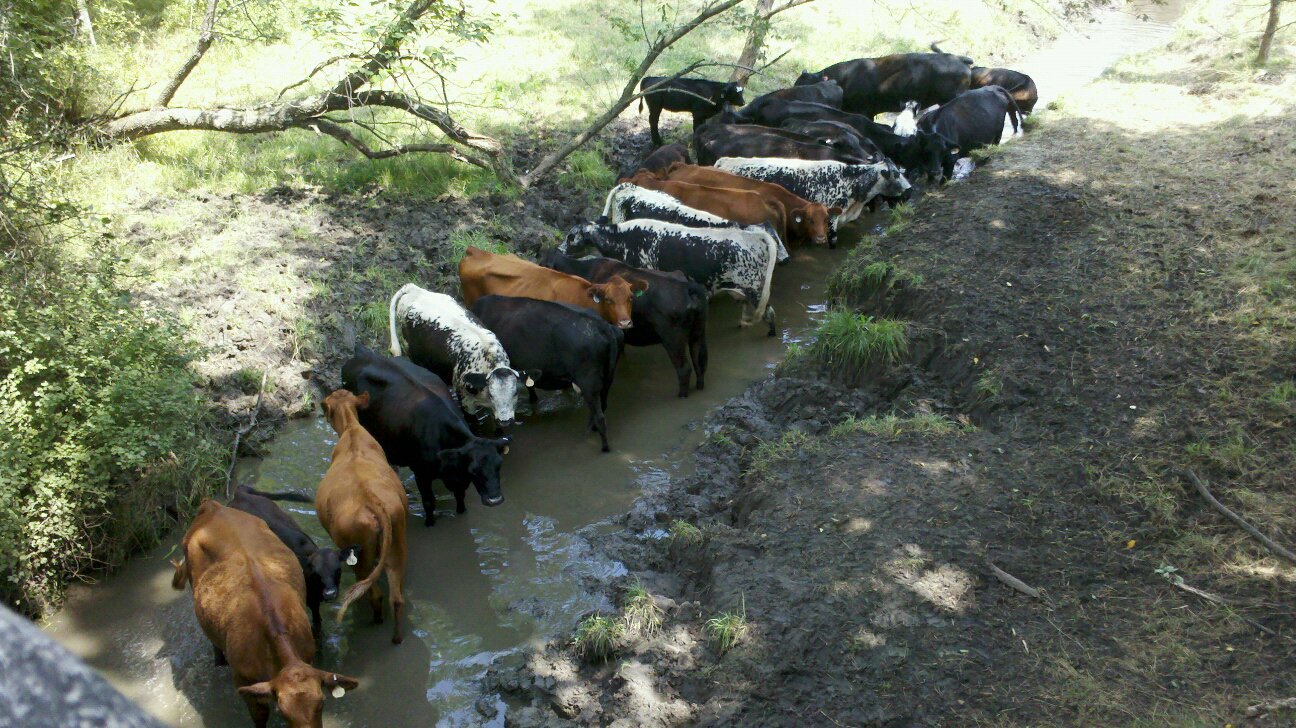
This was daughter Katie's view today as she was biking on the trail between Redfield and Linden, Iowa. At almost 5:00 PM and about a half-hour's drive from these cows, Bill's and my thermometer says 96 degrees. (These cows want you to click on this image so they can see you better.)

(Click here to go to Louise Gunderson Shimon’s blog’s home page.)