Archive for the ‘Uncategorized’ Category

Another Mystery Item: Brass and Glass (Part II)

February 22, 2011

This steam engine photo is from the October 2, 1959, Fort Dodge Messenger and Chronicle.* I don't know for sure, but assume that this steam engine is similar in concept to that of my Great-Uncle Art (mentioned below).

.
Click on image to enlarge.

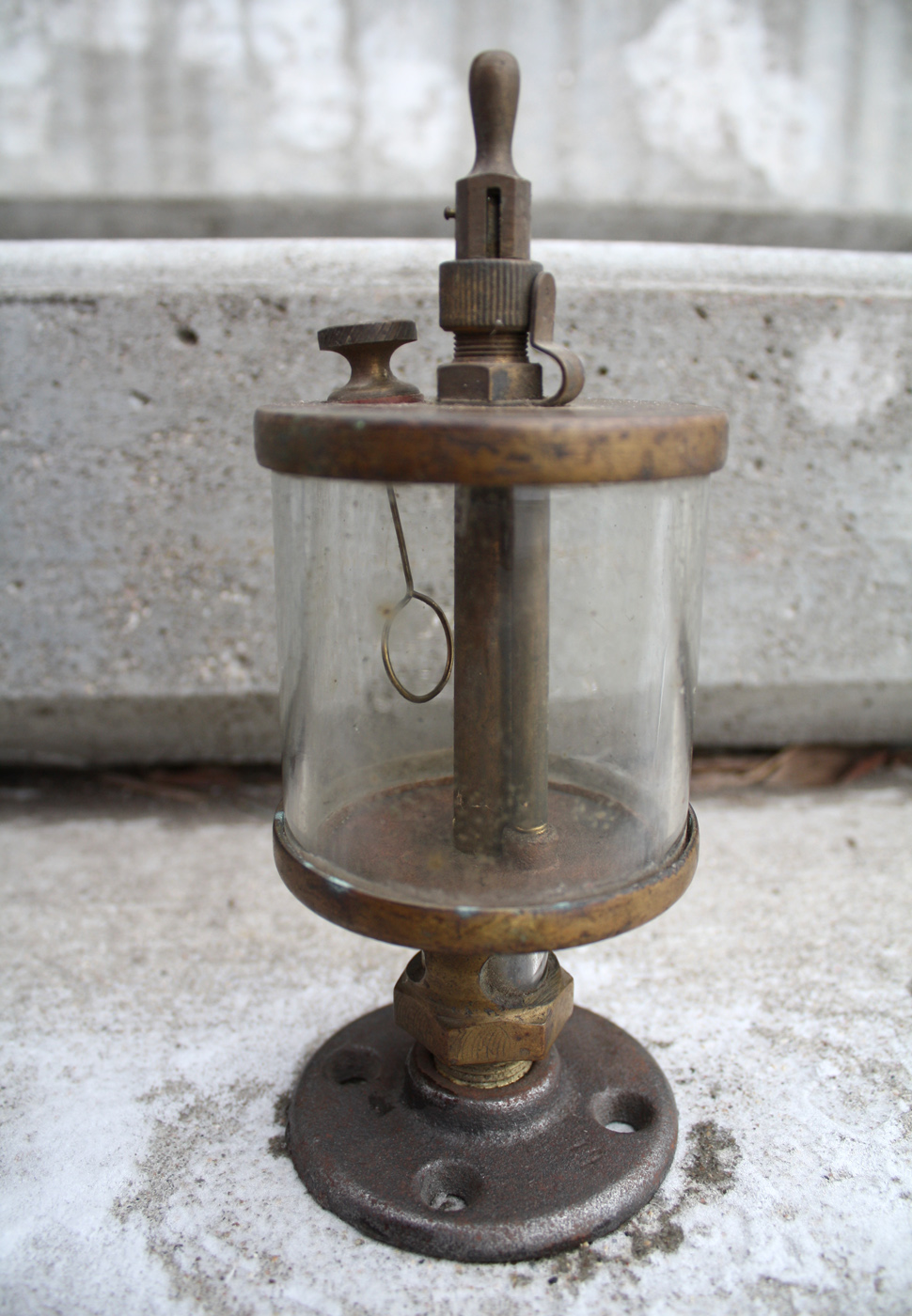
In the previous post I included a photo of what my father  (Deane Gunderson) said is a steam engine crankshaft oiler. I don’t know if that is the official name for the item or more of a descriptive name.

On Independence Day in 2005 my dad and I were cleaning out the furnace room of the basement at Gunderland. We ran across two steam engine oilers, both of which my dad later passed along to me, including the one in the photo at the left. Below are my notes from asking Daddy questions that day about the oilers.

.

Daddy guesses the oilers are from the 1920s during Uncle Art Gunderson’s (Aunt Ruth’s and Grandpa John’s brother) time.

They are an oiler for an old steam engine. Daddy said, “I’ve always associated them with Uncle Art Gunderson because he owned a steam engine. You take off the cap. Pour oil in and put the cap back on. If the engine was running and you wanted to lubricate the big shaft, you would pull the lever up and the oil would drip. At night you would close (it) because the machine would not be running. Otherwise it would drip and waste.”

I asked Daddy why Uncle Art had a steam engine. Daddy said, “It went with the threshing machine. It furnished the power for the threshing machine.”

..
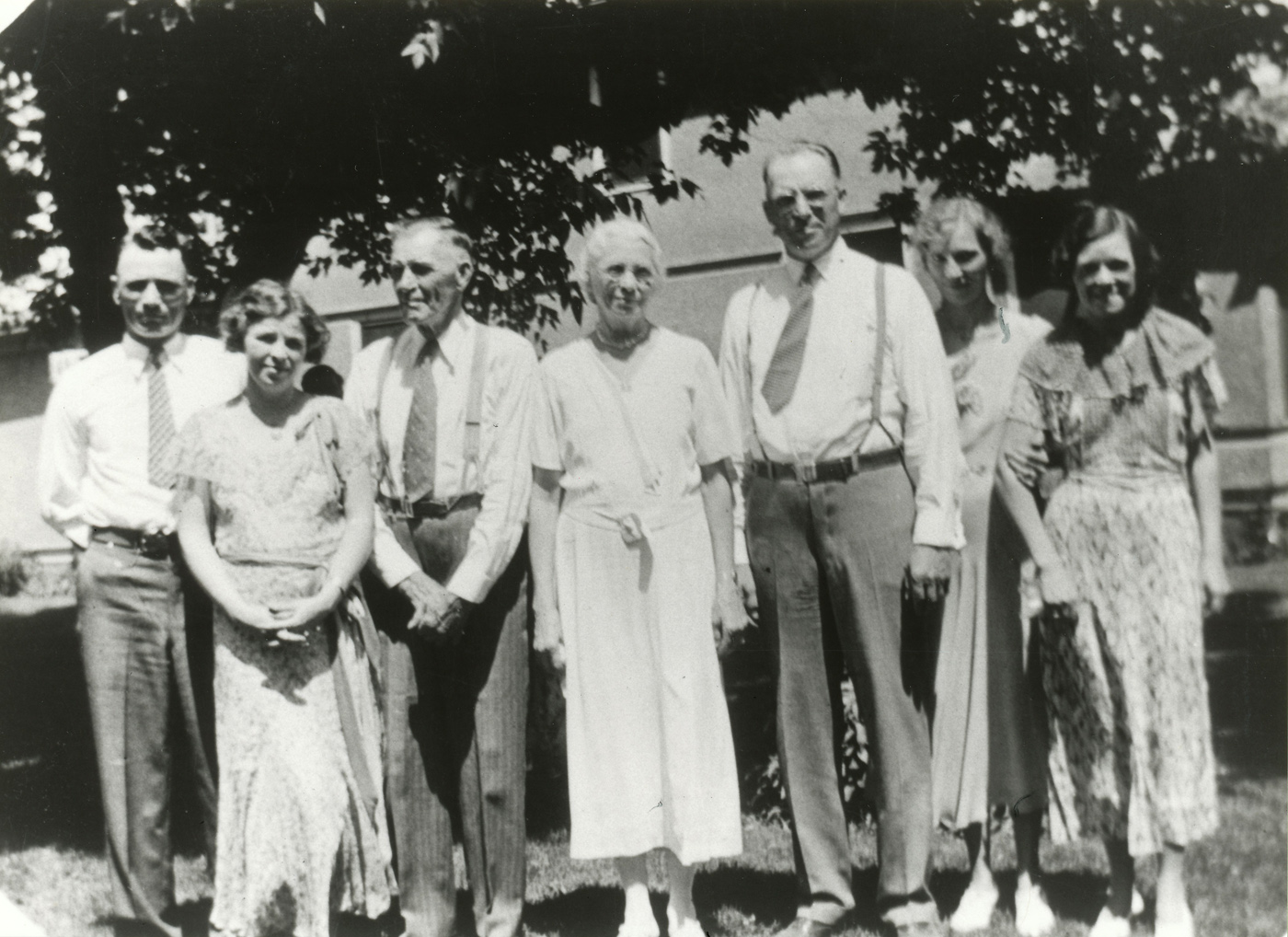
Art Gunderson is the tallest man, third from the right. L to R are my grandfather and his siblings with their parents: John Gunderson (my grandfather), Martha Gunderson Boggs, Charles Lewis (my great-grandfather), Dena (my great-grandmother), Arthur (the great-uncle who owned the steam engine), Ruth Gunderson VandeSteeg and Naomi Gunderson. About this photo my mother wrote, "Golden Wedding Anniversary of Mr. and Mrs. C.L. Gunderson in 1934."

.

*I’ll post the full Fort Dodge Messener and Chronicle article within the next month.

(Click here to go to Louise Gunderson Shimon’s blog’s home page.)
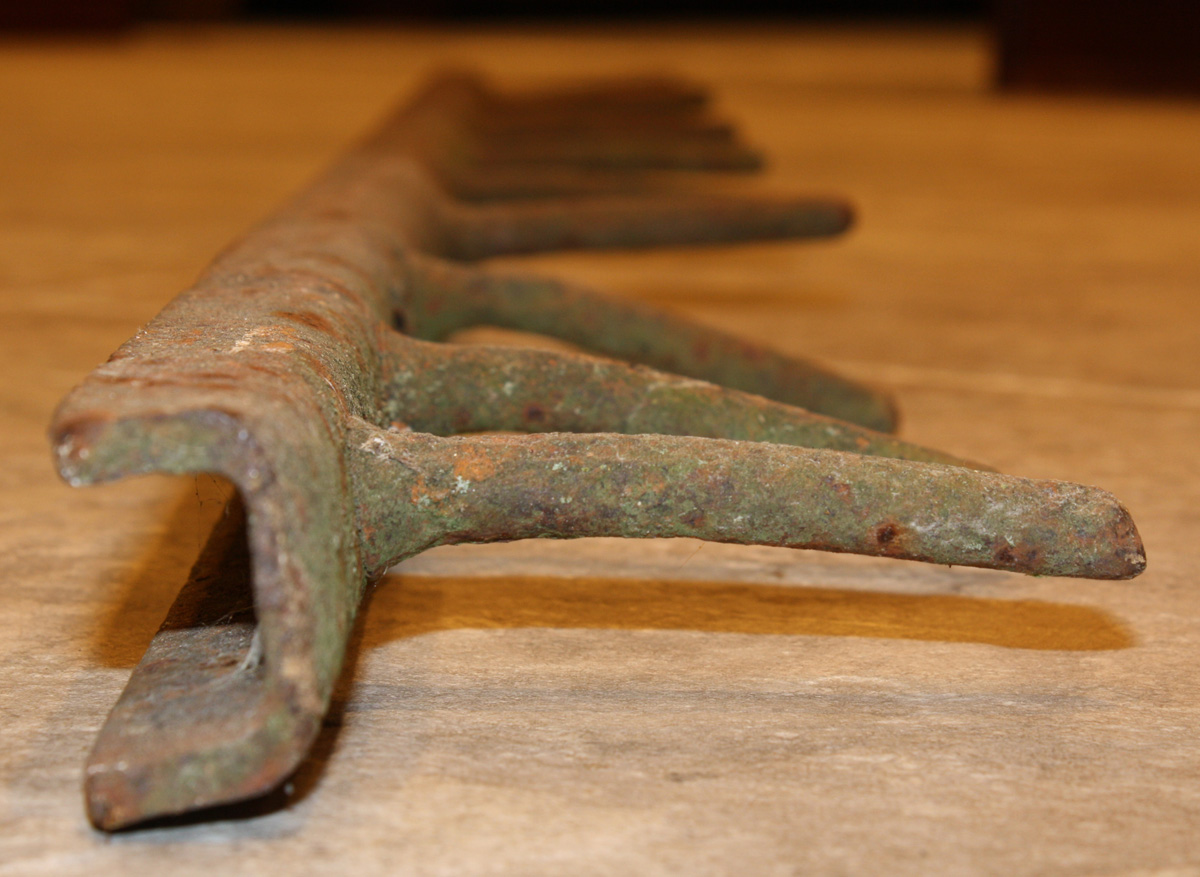
Another Mystery Item: Brass and Glass

February 20, 2011

I’m curious to know if you know what the item in this photograph is, and how it was used. I do know, but only because my father, Deane Gunderson, told me.

If you prefer to not comment below, but would like to email to tell me your guess, or your in-the-know answer, feel free to do so. mariongundersonart@gmail.com

Clicking on this photo will magnify detail.

.

(Click here to go to Louise Gunderson Shimon’s blog’s home page.)

(Pretending to) Get Married in Mallard, Iowa

February 15, 2011

Tonight I was going through some super8/8mm movies that I don’t know if I’d ever even seen. I ran across this shorty (21 seconds) from my days of teaching home economics at Mallard, Iowa. The video is of the students in the senior Home Arts class as they were escorted into the home ec. room for their mock weddings.

The Home Arts curriculum was set before I started teaching at Mallard. It was geared 100% to getting married. The administration’s expectation was that I follow the curriculum of the previous home ec. teacher…probably because it had always been a popular class, and, face it, at that time, there was more focus in society on being married as opposed to not.

If I were teaching a similar class today, I’d have the students concentrate more on things like family finance, compatibility, and commitment than on choosing a wedding cake or the four Cs when shopping for a diamond.

When I started teaching at Mallard I was 20 years old; some of the seniors were just a year younger than I at the time. I might have had more growing up yet to do than many of them did!

Oh, yes…I remember the “boys” class when they cooked a turkey for Thanksgiving. They got their clean-up done awfully quickly. Sort of. I didn’t discover until the end of the year that those boys put the turkey bones way back in the corner of the lower cabinets! (How I didn’t discover those turkey bones before then, I’ll never know!)

Those same boys had a home ec. lesson in mending/patching jeans. But, the laugh was on me…or rather on Bill. The boys practiced their mending on Bill’s jeans. After I took the jeans home to Bill and he went to step into a pair, he discovered that those boys had sewn his pant legs closed!

Back to the video. After the Home Arts students graduated in the spring of ’77, Bill and I had a get-together for them at our home. (I.e., all or almost all of the students in the video showed up at our house.) We had no idea what to expect, but to cover our fannies, we made sure that the students were of legal age. (All were except for one girl.) There did end up being some “adult” beverages brought by at least one student, which made me quite nervous. But, in talking with the parents afterward, they were just glad their daughters and sons were with us instead of who knows where.

Fond memories of the days that were. Just like yesterday, today and tomorrow will one day turn into the fond memories for our futures.

(Click here to go to Louise Gunderson Shimon’s blog’s home page.)

How to Write a Résumé … in 1940

February 11, 2011

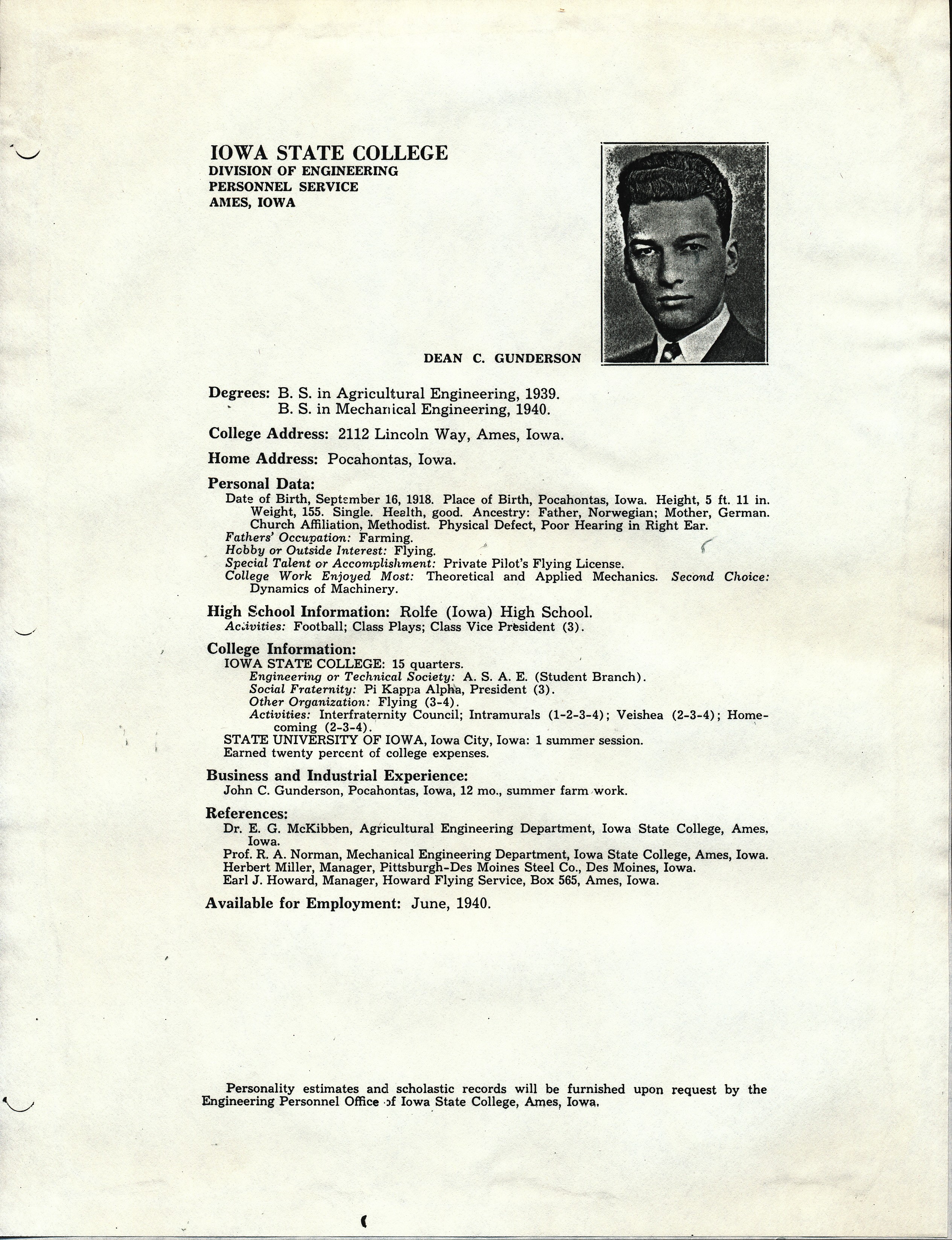
To enlarge the résumé text, click once on the image. Twice for further magnification.

.

The year: 1940. My father’s (Deane* Gunderson) résumé most likely played at least a small part in his landing a job with the John Deere Tractor Company in Waterloo, Iowa. He was an engineer for John Deere from 1940-1945.

Can you imagine the looks on the faces of human resources personnel if this résumé came across their desks in this day and age? Forget the looks. What about the potential law suits if in 2011 they did hire him…or if they didn’t?!!!

* * * * * * * *

*My father’s legal first name is “Deane.” For a while he dropped the last letter and went by “Dean.”

(Click here to go to Louise Gunderson Shimon’s blog’s home page.)

Red, Red, Red

February 9, 2011

The red background in the above banner is a cropping from the photo of strawberry pretzel salad in this post. The post includes a link to the salad recipe, as well. If you’re looking for a yummy salad for Valentine’s Day, or anytime, I hope you’ll try the recipe.

(Click here to go to Louise Gunderson  Shimon’s blog’s home page.)

Deicing in Dallas

February 4, 2011


The aircraft in the distance is being deiced at the Dallas/Ft. Worth International Airport Thursday morning. You can see the part-glycol fluid somewhat pooled on the aircraft. I took this photo from inside the aircraft that was next in line to be deiced. (Click on image to enlarge.)

Yesterday I flew from Dallas to Minneapolis to Des Moines. After boarding Delta’s Embraer 175 (twin-jet) at DFW, passengers were told that our aircraft needed to be deiced. It had picked up ice en route from Detroit to Dallas earlier yesterday.

The following is a video* of one wing being deiced. I’m wondering how many gallons of deicing fluid were needed for just this one wing, and how much fluid in total for this aircraft.

A pilot friend told me tonight that in 2001 he had a Beach King Air deiced. The King Air was an approximately 10-seat plane with a wingspan of approximately 50 feet. It had severe icing about 1/2 inch thick. In 2001 the cost for deicing the thick ice on his small aircraft was $3,000…300 gallons of deicing fluid at $10/gallon. If there had been just frost on the wings, the deicing cost would have been much less.

So…that was $3,000 in 2001 to deice a small aircraft. With deicing fluid prices being higher** a decade later in 2011, just think how astounding the cost of deicing must be on aircraft with much larger surface areas (i.e., huge jets) than the Beach King Air.

I want to get this posted tonight, so am not taking the time to research about different types of deicing fluid. However, some basic information about different types of fluids is included in this 2001 article.

*I am wondering if the drain-looking circle in the concrete at the lower right of the video is part of some sort of deicing fluid recapture system. DFW has dedicated deicing pads. The aircraft I was in departed the terminal and was deiced at one of these pads before taking off.

**according to a few online forums

(Click here to go to Louise Gunderson Shimon’s blog’s home page.)
Static Wicks and the Rule of Thirds

January 31, 2011

.

I am in Texas. During my flight from Iowa, with my point and shoot camera I took photos of the landscapes/cloudscapes, including the static wicks at several points along this wing. Within the confines of the recessed window opening, when taking the photos I tried to keep in mind the rule of thirds.

Clicking on the photos will magnify the static wicks.

.

By the way, after midnight tonight before I say anything tomorrow (the first day of the month), with Jackson I’ll get to say Rabbit, Rabbit, Rabbit!

(Click here to go to Louise Gunderson Shimon’s blog’s home page.)

Manure Hauling in 1948 (Part II)

January 27, 2011

After Loel Diggs* sent his comments about manure hauling (that I posted in Part I), I asked him how long it had been since his family raised oats. In response, he sent the following comments.

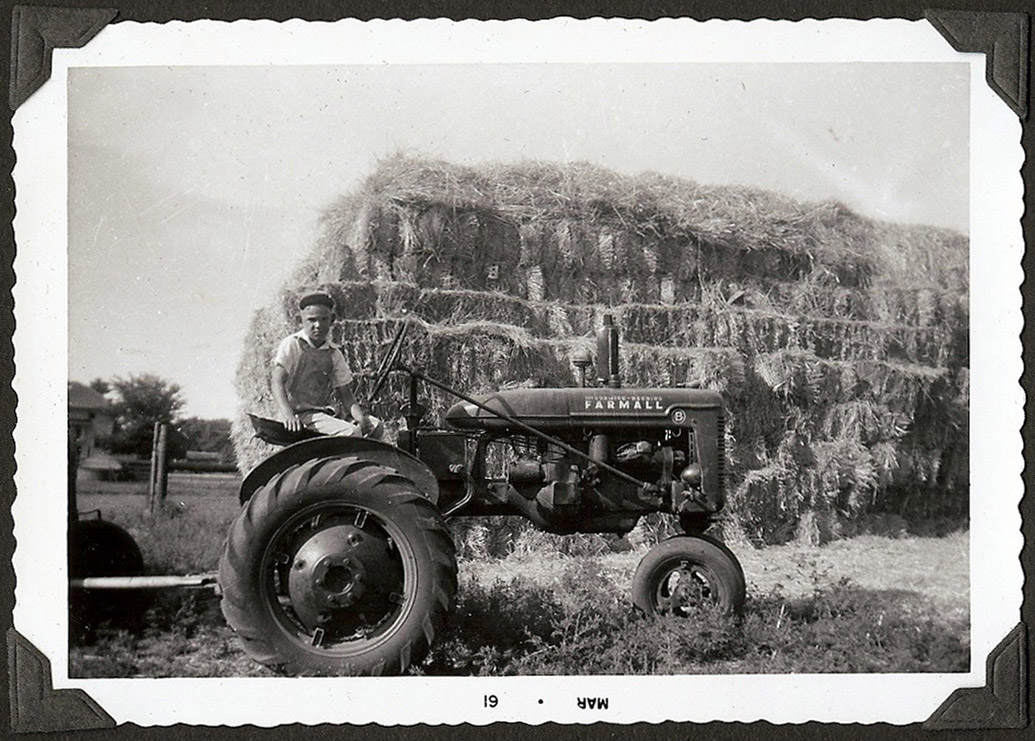
Pictured is Loel Diggs (11 years old in this 1948 photo) manure hauling with his Uncle Frank's rig: a Farmall B tractor and Oliver Superior No. 7** manure spreader. (Click on photo to enlarge.)***

Memories of Loel Diggs

Regarding Raising Oats and Trading Labor

Oats haven’t been grown on the farm since back in the mid to late ’50s, once Dad decided to get completely out of livestock. Not only were oats used for a grain crop for livestock and straw for bedding, oats were also used as a cover crop for crops such as Alfalfa, Timothy, Brome, and Sweet Clover when grown for next year’s Hay or Pasture land. The Farm was on a 3 year rotation growing Corn, Soybeans and Oats, so hay ground and pastures would not be changed for three years or more.

Your spreader series just reminded me of the way labor would be traded between farmers when harvest and other such jobs needed to be done, and all parties involved did not have all the mechanized equipment to get the job done quickly. Dad and two of my Uncles (two of my Mother’s 4 brothers) traded a lot of labor when harvest, haying and manure hauling was done between the three Farmsteads.

The uncles that my Dad traded labor with the most were: Conrad and Franklin Majorowicz. All the farmsteads were within a 6 mile radius of each other.

* * * * * * * *

* * * * * * * *

*Loel grew up on his family’s farm northeast of Rolfe, Iowa, 1/2 mile west of Des Moines Township School (D.M.T.) where he graduated from high school in 1956.

**The following quote about the Oliver Superior No. 7 model of manure spreader (pictured above) is according to a http://www.oliverinformation.com web page.

In 1939 Oliver introduced the Oliver Superior No. 7 spreader. This was the first spreader designed specifically for use with rubber tires. This was the Cadillac of all spreaders. With rubber tires, a smooth ride and a wide non-slip footboard for the operator, hauling manure was no longer a painful chore (unless you filled the box with a pitchfork.) The farmer now had a handy pedal clutch to start and stop the spreading. The tractor user could operate the spreader with a rope. The machine was made was with sheet ingot iron instead of wood which saved 400 pounds over competitive outfits. Ribs were incorporated into the sides for additional strength.

***UPDATE: After posting the above photo, I asked Loel what model of tractor he thinks is in the upper right of the photo. He said it looks like his Uncle Conrad’s WC Allis-Chalmers.

* * * * * * * *

(Click here to go to Louise Gunderson Shimon’s blog’s home page.)

Manure Hauling in 1948 (Part I)

January 25, 2011

Loel Diggs, formerly of rural Rolfe, Iowa, (D.M.T. ’56) saw my post that included a photo of a manure spreader beater bar. Doing so prompted him to send to me two photos and manure spreader-related memories from his youth.

This picture of Loel was taken in 1948, not in 1961 as dated on the white border. He was about 11 years old at the time. The tractor is a Farmall B. The tractor and spreader shown here were owned by Loel's Uncle Frank. (Click on photo to enlarge.)

Manure Hauling Memories of Loel Diggs

I found these pictures* that my Mom took of me when the mid summer (after oat harvest) manure hauling season was going on. I had two uncles** that were involved in raising livestock, as my parents*** were, so a couple weeks in early August were spent removing all the manure piles around the barns and the cattle sheds cleaned out.

I wasn’t old enough to run the tractor with the manure loader, but was old enough to to run a rig back and forth from cattle yard to field. Really felt grown up, (even though I was only about 11 years old when these pictures were taken) that I was trusted with a rig, to drive it, unload it and not tear the spreader up. At the time these pictures were taken the spreaders being used were all recently converted horse drawn spreaders being pulled by tractors. Being that the spreaders were designed to be pulled by horses, the mechanics of the spreaders could be stressed very heavily during manure hauling season, because of the increased speed capable with a tractor over the speed of horses. Even at the age I was, I was reminded that if I broke the unload mechanism (floor conveyor chain) I got to unload the spreader with a pitch fork. I recall in having that honor only once or twice, with help in pitching it off from my Dad, of course!

Relating to the beater reels and bars [referred to in a previous post], if the baler twine was not always taken out of the hay being fed or out of the straw being used for bedding you would spend time cutting the twine off the beater reels and bars with your jackknife. You might say you could get up close and personal with beater bars—— doing that type of cleanup!

* * * * * * * *

*The second photo will be posted in Part II.

**Loel’s two uncles referred to here were Conrad and Franklin Majorowicz.

***Emma and Tom Diggs

(Click here to go to Louise Gunderson Shimon’s blog’s home page.)

I learned, a new definition for a term, that I might, maybe, use sometime.

January 18, 2011

Recently my brother-in-law Jeff revealed to me, via my sister Peggy, the Urban Dictionary meaning for the term “Shatner commas.”

The meaning is at this link: http://www.urbandictionary.com/define.php?term=Shatner%20commas&defid=4307935

If you didn’t already know what “Shatner commas” are, now you do!

* * * * * * * *

I haven’t been working on the blog much recently because I’m catching up just a little on my to-do list. However, I’ve got another manure spreader post coming up soon.

(Click here to go to Louise Gunderson Shimon’s blog’s home page.)